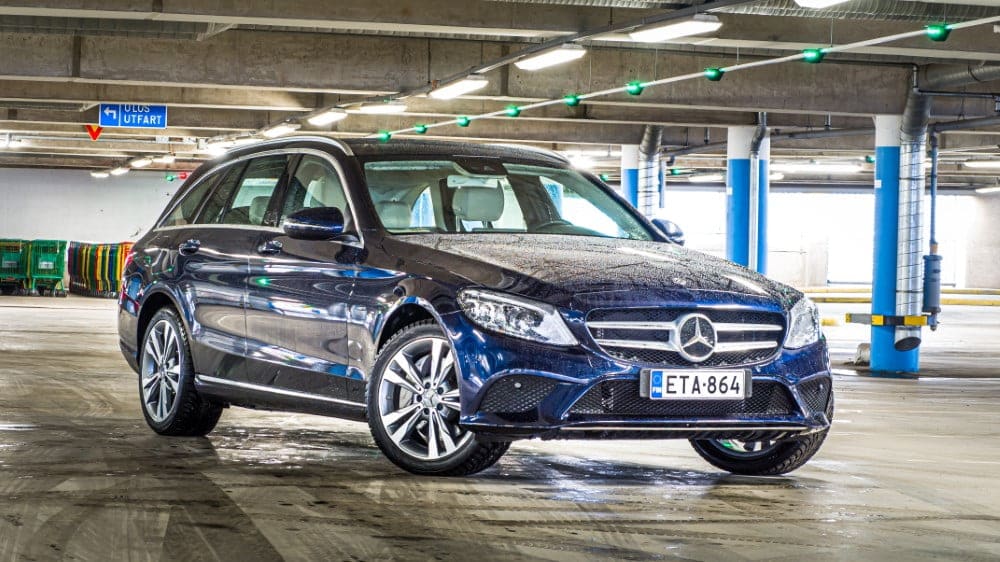
Mercedes-Benz currently has the largest market for hybrid models in Finland, at least in terms of the number of different models. We test drove the plug-in diesel hybrid C300 de.
- Engine
- Plug-in Hybrid
- Power
- 225 kW (306 hp)
- Range
- 48 km (WLTP)
- Consumption
- 1.3 l/100km
- Drivetrain
- RWD
- 0–100 km/h
- 5.7 s
- Battery
- 13.5 kWh
- Seats
- 5
- Price
- from €54,703
The C300 de offers a very interesting combination of diesel and electricity, which is not available from other manufacturers, at least not yet. Mercedes says it is the only carmaker to combine a diesel engine with plug-in technology.
While most hybrids are a combination of petrol and electric, the C300 de offers significantly more torque and lower fuel consumption thanks to the diesel engine.
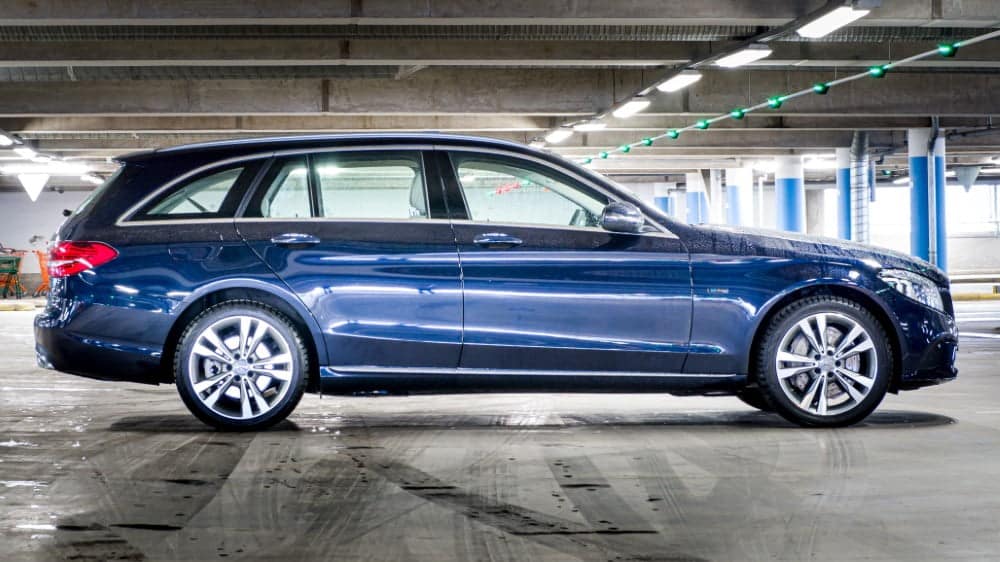
The diesel engine is a two-litre, 4-cylinder engine with a maximum power output of 194 horsepower. The electric motor has an output of 90 kilowatts, or 122 horsepower, and is mounted inside the gearbox.
The maximum combined output is 225 kW or 306 horsepower. The total maximum torque produced by the motors is limited to 700 newton metres.
The transmission is the 9-speed hybrid gearbox 9G-Tronic, developed for hybrid models. The gearbox is a familiar 9-speed automatic transmission with torque converter and integrated torque converter, clutch release and electric motor.
Compared to the standard 9G-Tronic gearbox, the hybrid gearbox has only 108 mm more overall length.
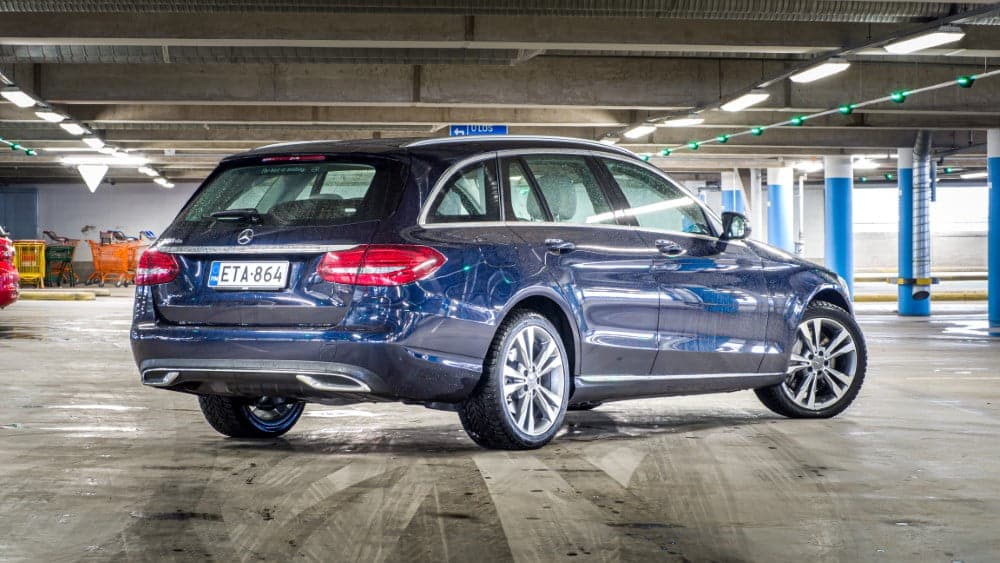
13.5 kWh battery and 7.4 kW charger
The car moves quite briskly in city driving on electric motor power alone. In addition to the maximum power of 90 kW, the maximum torque of 440 Nm provides a pleasant feeling of instant power. On electric power alone, the top speed is 140 km/h.
In addition to the C-series, the same battery is used in the E, GLC and S-series.
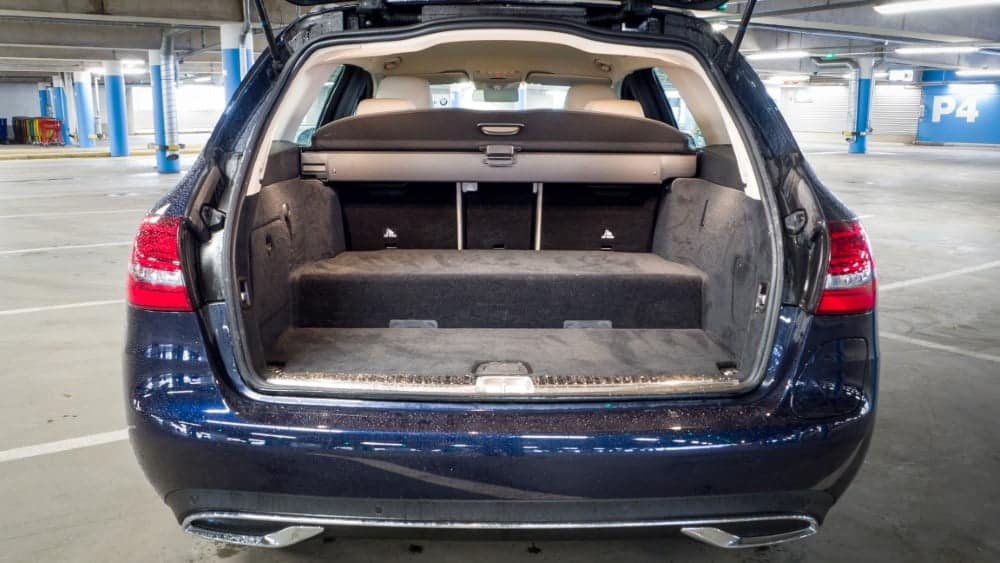
The battery and charger are located under the boot floor. The mass on the rear axle is good for weight distribution, but the battery takes up space in the boot. In the middle of the boot floor there is a ‘threshold’ about 14 cm high, which awkwardly divides the floor into two spaces of different heights.
Charging the battery to full capacity takes from just under two hours to just over six hours.
A home charging station currently takes 1.5 hours to fully charge to 10% of the charge level, while a standard household socket takes just over five hours.
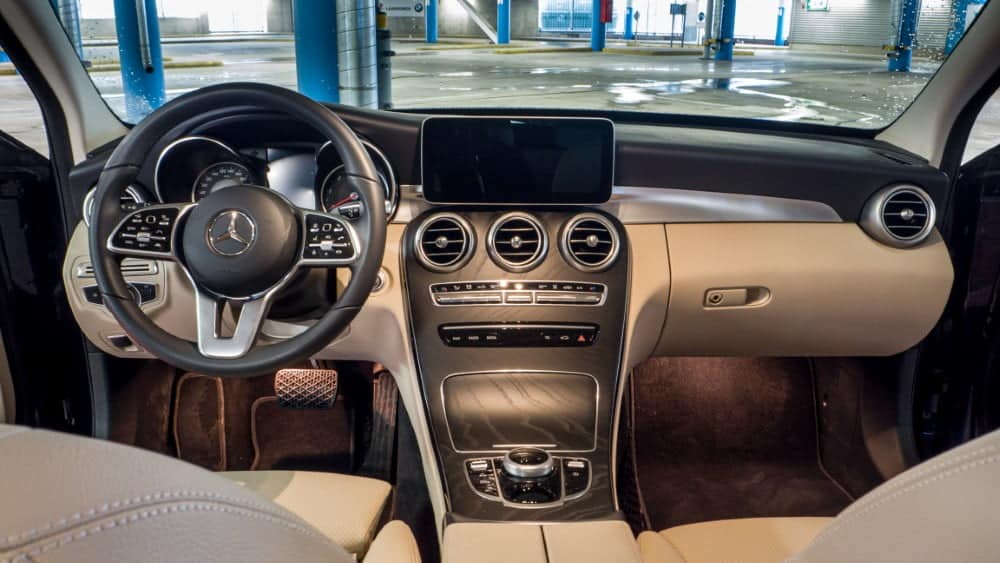
Drivability a plus, ergonomics a minus
The C-series is a masterpiece when it comes to drivability. The engines and gearbox work together seamlessly, and gear changes are really smooth even with a heavier accelerator pedal.
Maximum torque of 700 Nm. ensures a lifeless ride. The Comfort chassis is very crisp and tactile. Another plus is the small turning radius, which has always been a Mercedes characteristic.
However, there is room for improvement in the ergonomics of the cabin. Even though this is not a sporty street car, it would be nice to feel more support from the seat in order to support a comfortable ride. The extended thigh support remains too short and low, even when set to the extreme position.
Hybrid, E-Mode, E-Save or Charge
Mercedes has cleverly implemented settings that allow you to choose how to use the battery charge or whether to drive with the internal combustion engine alone. The situation is not the same for all competing brands.
Clear naming of the driving settings would be a good example for many manufacturers to follow.
- Hybrid is the default setting, with all functions available. The car itself adjusts its electricity consumption and recovery according to the driving route and driving style.
- TheE-Mode uses only electricity as long as the battery has enough charge. The maximum output of the electric motor is easily noticeable from the response point of the accelerator pedal, after which pressing the accelerator pedal further will start the internal combustion engine.
- InE-Save mode, the battery is conserved and most of the driving is done by the internal combustion engine alone.
- Charge, as the name suggests, acts as a battery recharging mode. It is powered by the internal combustion engine, which charges the battery while driving. This is also when fuel consumption is at its highest by far.
With a full battery and a pre-heated car, the C300 de covered a maximum of 33 km on electric power alone.
Whether the car is warmed up or driven off in a cold car has a big influence on the range. The route and driving style also have a big influence on the range. However, there is still some way to go before Mercedes reaches the WLTP target of 48 kilometres.
Bright prospects for the future
Mercedes is already at the forefront of the development of new hybrid models and the pace of development is accelerating. Mercedes aims to have more than 20 hybrid models on the market by the end of this year.
Currently, there are already rechargeable hybrids available for the A, B, C, E, S, GLC and GLE models. The C-series already offers petrol and diesel hybrids for both the saloon and estate models. Four-wheel drive is also available for the sedan petrol hybrid.
Mercedes aims to have an electric car or at least an electrically powered version of all its passenger car model ranges on the market by 2022. This means that Mercedes is certainly not lagging behind other brands, but rather the other way round.
Mercedes-Benz C300 de T A Business Avantgarde Edition EQ Power
- Engine: 1950 cm³, 4-cylinder
- Electric motor: 90 kW
- Driving battery capacity: 13.5 kWh
- Maximum power (petrol-electric): 225 kW, 306 hp.
- Maximum torque (petrol-electric): 700 Nm.
- Acceleration: 5.7 sec (0-100 km/h)
- Drive mode: rear-wheel drive
- Combined consumption: 1.3 l/100km.
- CO2 emissions: 34 g/km.
- Starting price: €54 703 (300 de T A Business Edition EQ Power)