- Engine
- Electric
- Power
- 320 kW (435 hp)
- Range
- 417 km (WLTP)
- Consumption
- 24.5 kWh/100 km
- Drivetrain
- All-wheel drive
- 0–100 km/h
- 5.0 s
- Top Speed
- 200 km/h
- Battery
- 87 kWh (net) / 90 kWh (gross)
- Seats
- 5
- Price
- from €58,960
Test drive and text: Antti Järveläinen
The roots of Nissan’s sports car models go back long before NISMO. In the 1960s and 70s, legendary models such as the Datsun 510, Fairlady Z (240Z) and Skyline GT-R Hakosuka and Kenmeri reaped success on the race track. Nissan NISMO (Nissan Motorsports International Co.) was founded in 1984, when Nissan merged two of its existing motorsport divisions.
NISMO started its success story first in the motorsport world, but since the mid-1990s NISMO has brought its expertise to its motorsport-inspired, performance street cars.
Today, in addition to producing street cars, NISMO races in the Japanese Super GT series and manufactures GT3 cars. The company’s electrical expertise comes from the Formula E series, among others.
The test-driven Ariya NISMO is the brand’s latest example of how to spice up the capabilities of a conventional all-electric car. Buying the Ariya NISMO is made as easy as can be in terms of equipment, as there are no optional extras to choose from – everything comes as standard and the exterior colour is always blue ‘NISMO’.
Few all-electric cars lack power
With the Ariya NISMO, however, the performance figures on paper are not mind-boggling if you’ve already had time to unleash the idea of a high-performance sports car – which is what inevitably comes to mind when reading the history of the NISMO.
Compared to Ariya’s most powerful ‘base model’, the NISMO has 95 kilowatts more power, while maximum torque remains at 600 newtons, as in the base model. The extra kilowatts will propel the Ariya NISMO from 0–100 km/h in five seconds.
Unfortunately, at the current, completely overstated, all-electric car power figures, the Ariya NISMO seems to be overshadowed in acceleration by quite a few competitors.
The car’s kerb weight adds more challenges to its drivability than just a sluggish 0–100 km/h. Nissan hasn’t escaped the laws of physics, and you can feel the weight pressing on the Ariya’s performance. The steering is a little on the light side, but there’s still a commendable amount of precision. The same can largely be said of the chassis, which is tuned to suit those who appreciate a snappy ride.
Overall, the Ariya NISMO’s ride quality is by no means inferior to its competitors in the same class. However, the expectations that the NISMO brand brings to the car set the bar so high that full NISMO points cannot be awarded for the driving experience.
Splendid exterior, spacious interior
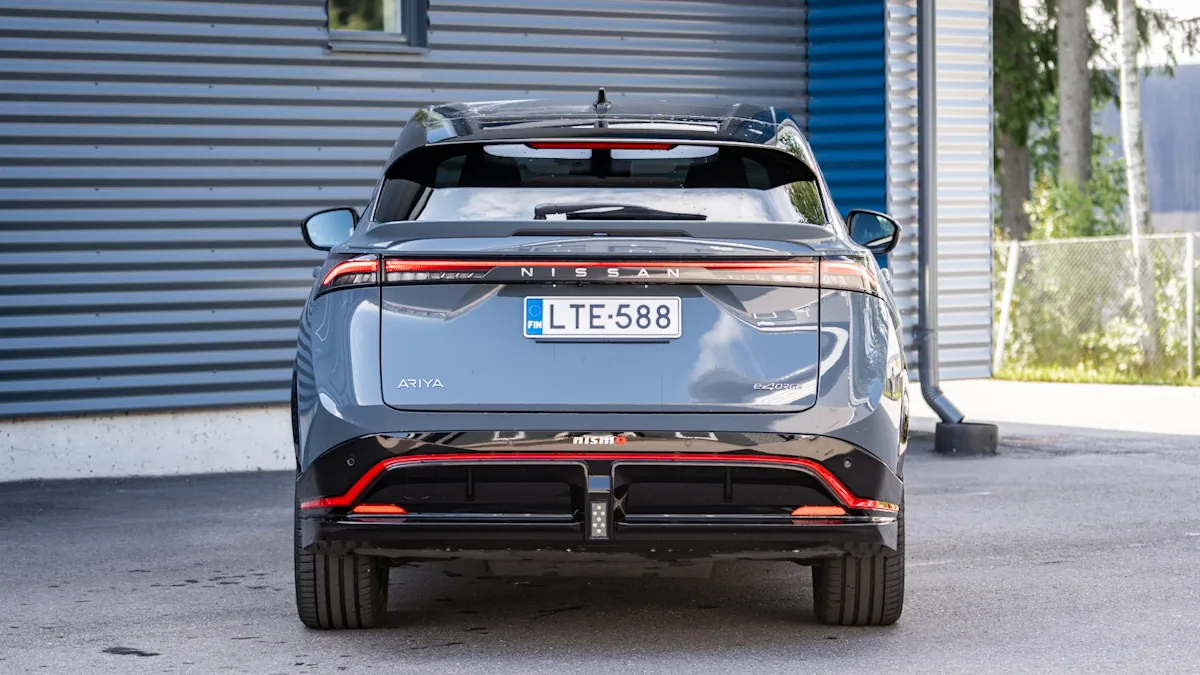
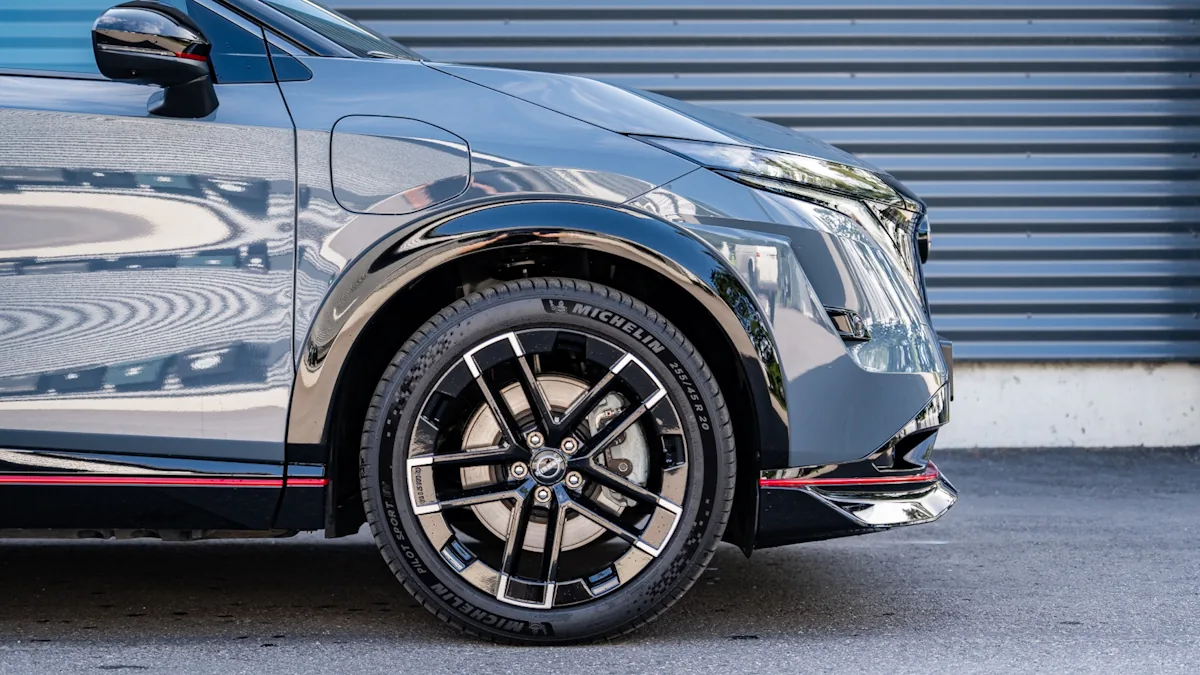
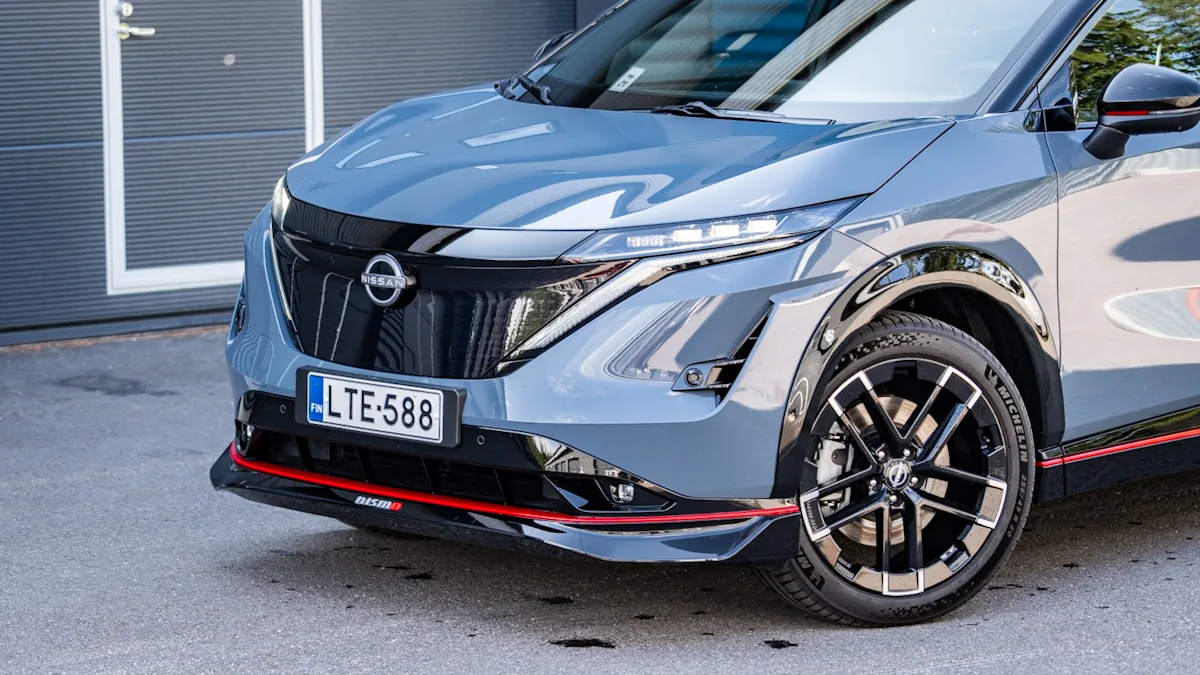
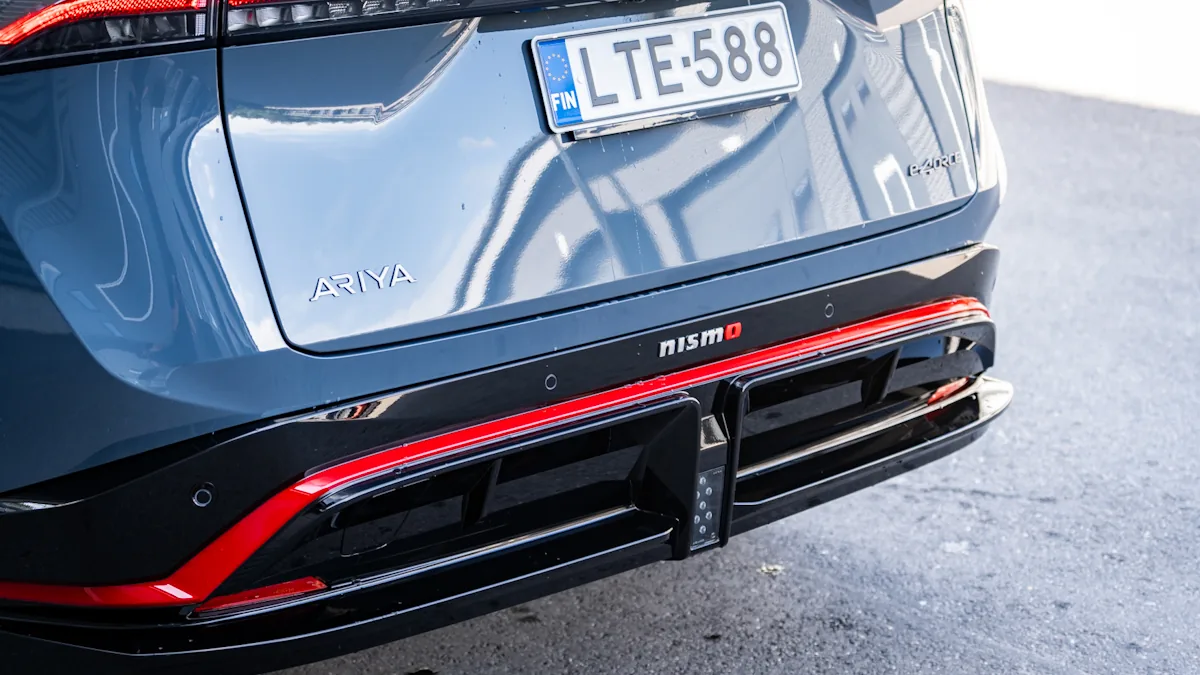
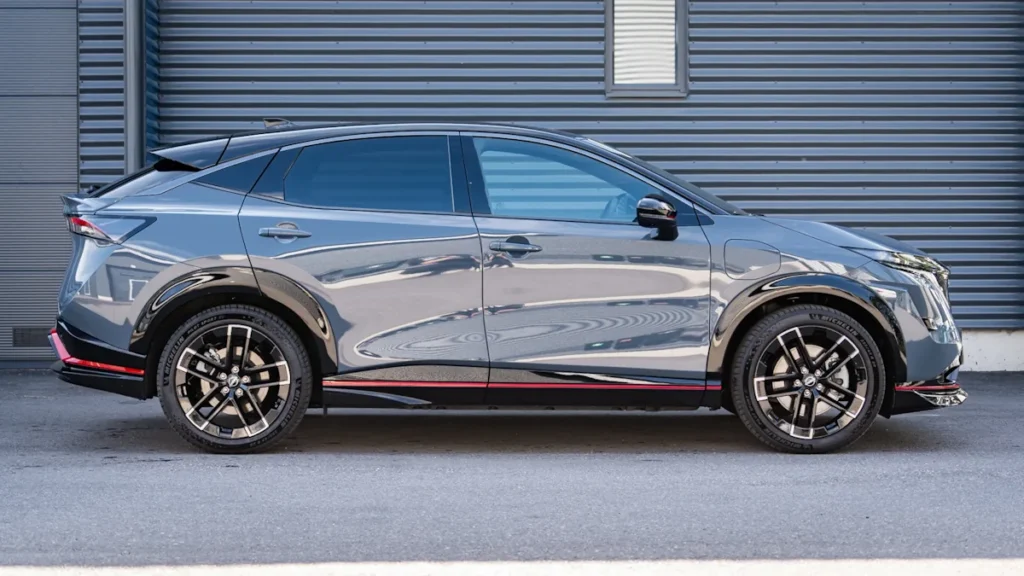
With a certain shade of grey on the exterior, the basic Ariya doesn’t always stand out from the rest of the car. In the case of the NISMO, the understated bluish exterior colour is brought to life with red swooping lines around the car, sporty bumper styling and 20-inch five-spoke wheels made by Enke, available only on the NISMO.
The body shapes are the SUV-style design familiar from many rivals in the same size class. On the NISMO, the NISMO logos on the front and rear bumpers are sure to divide opinion. Contrasting with the red dash lines are the gloss black surfaces on the fenders and bumpers.
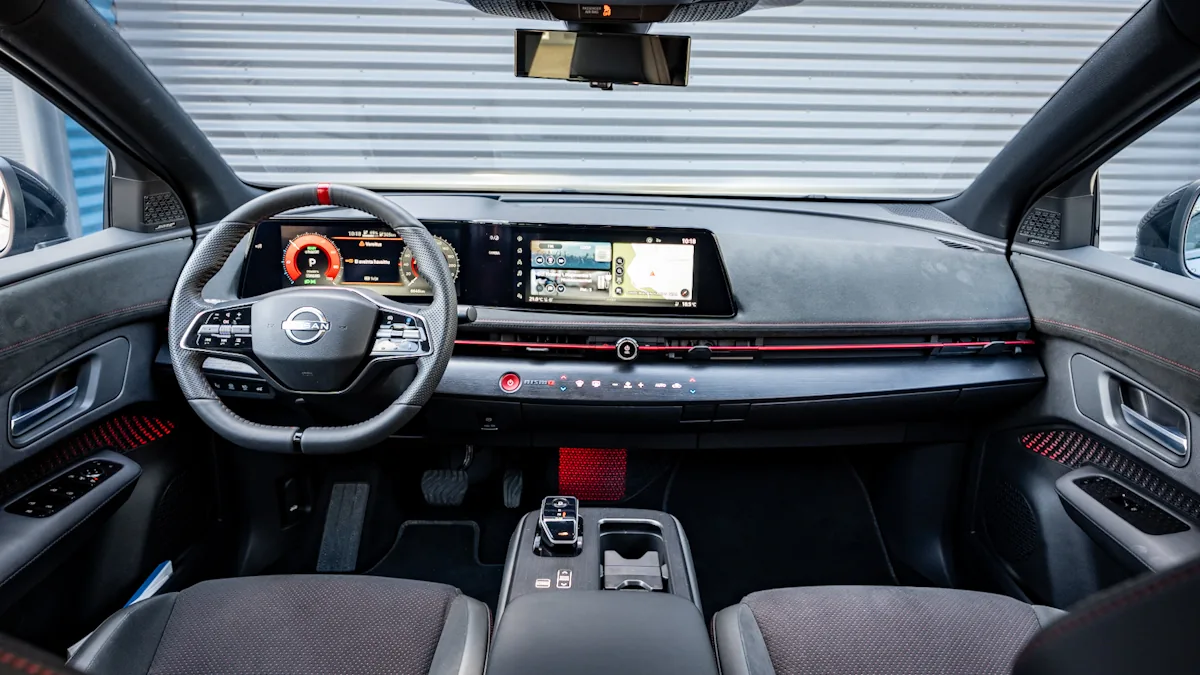
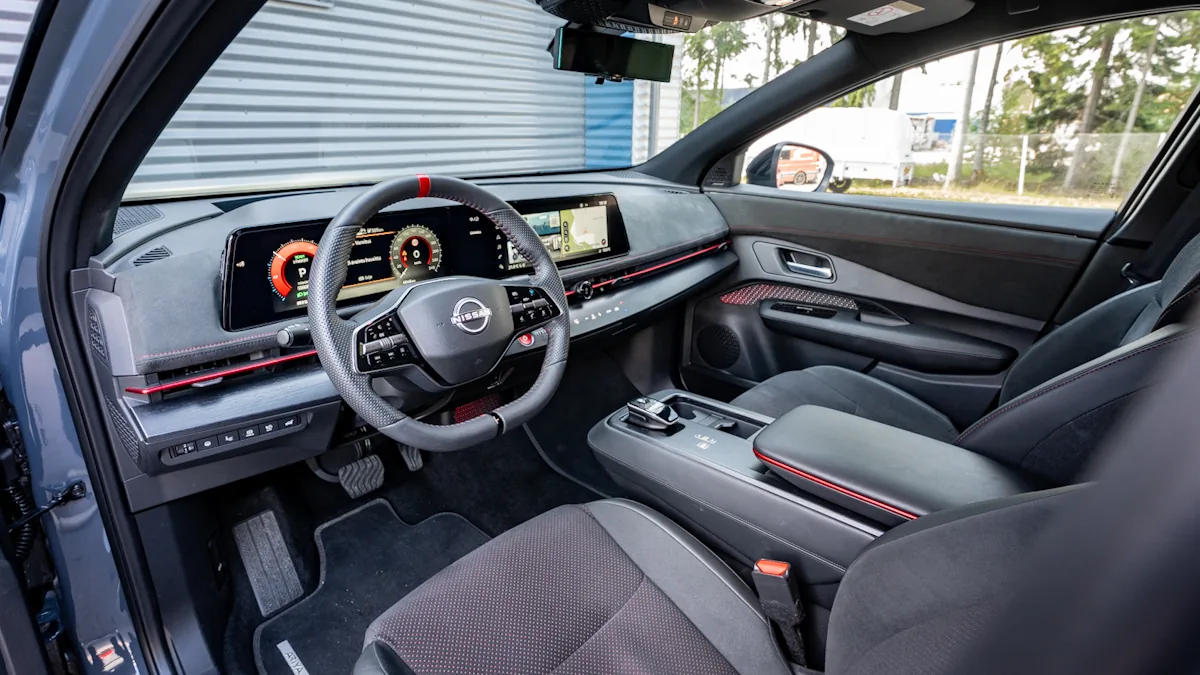
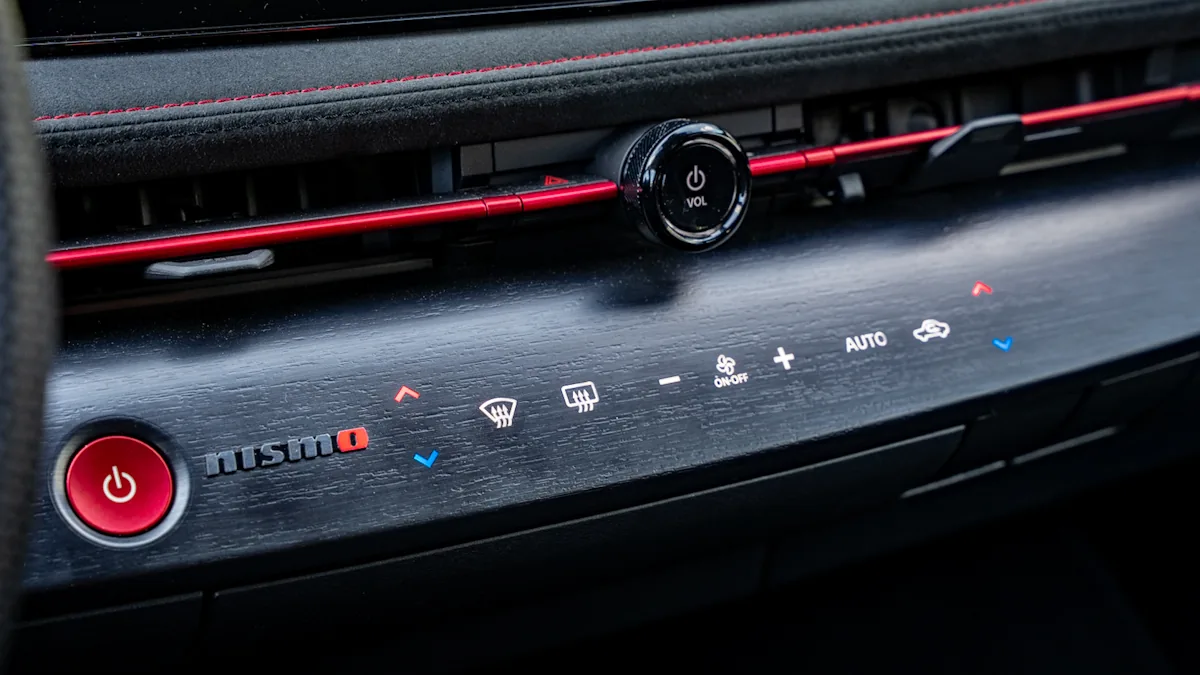
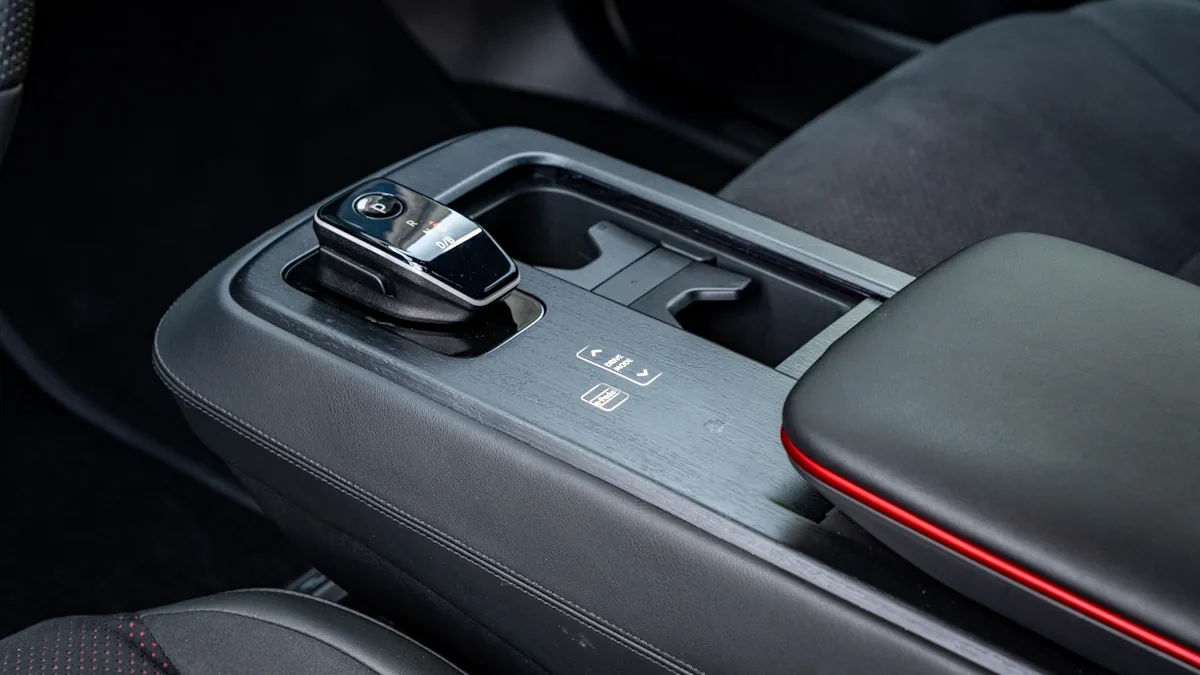
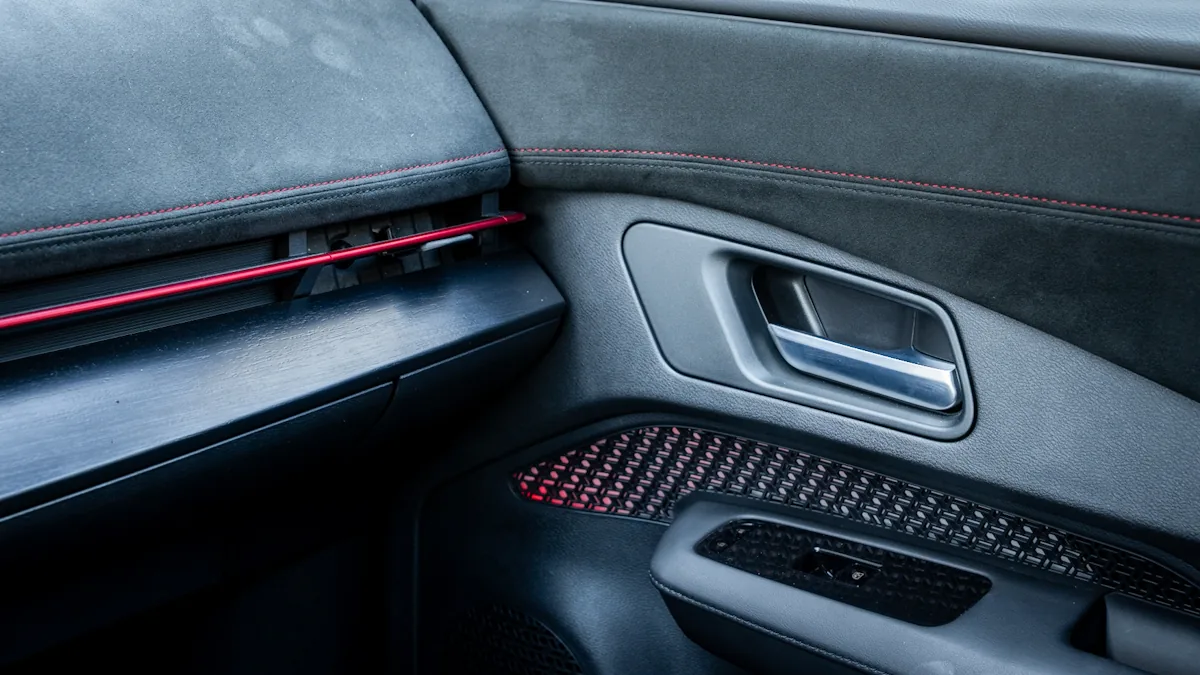
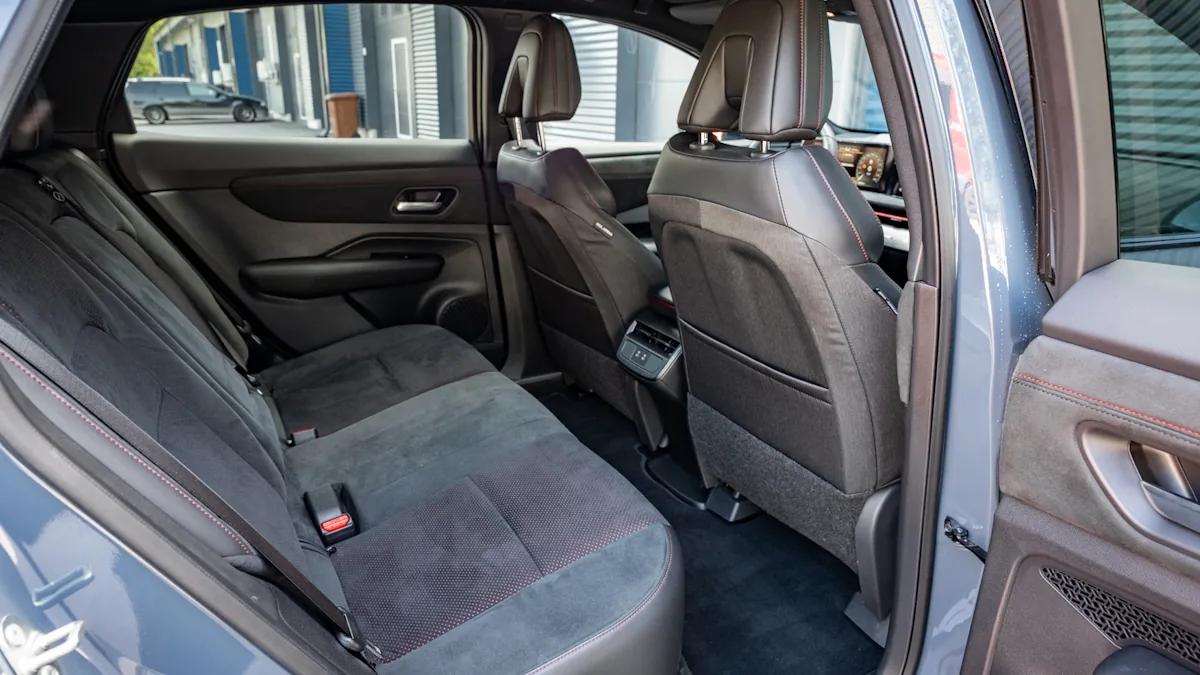
The familiar nismo spirit of the exterior continues inside the car. The dark, soft interior features a wealth of red detailing, from the centre markings on the steering wheel to the interior lighting. So much attention has been paid to the exterior that the usability of the physical buttons has sometimes been neglected.
Perhaps the best example is the dashboard climate control panel, where the buttons, housed in a stylish ‘wood panel’, could be much more user-friendly.
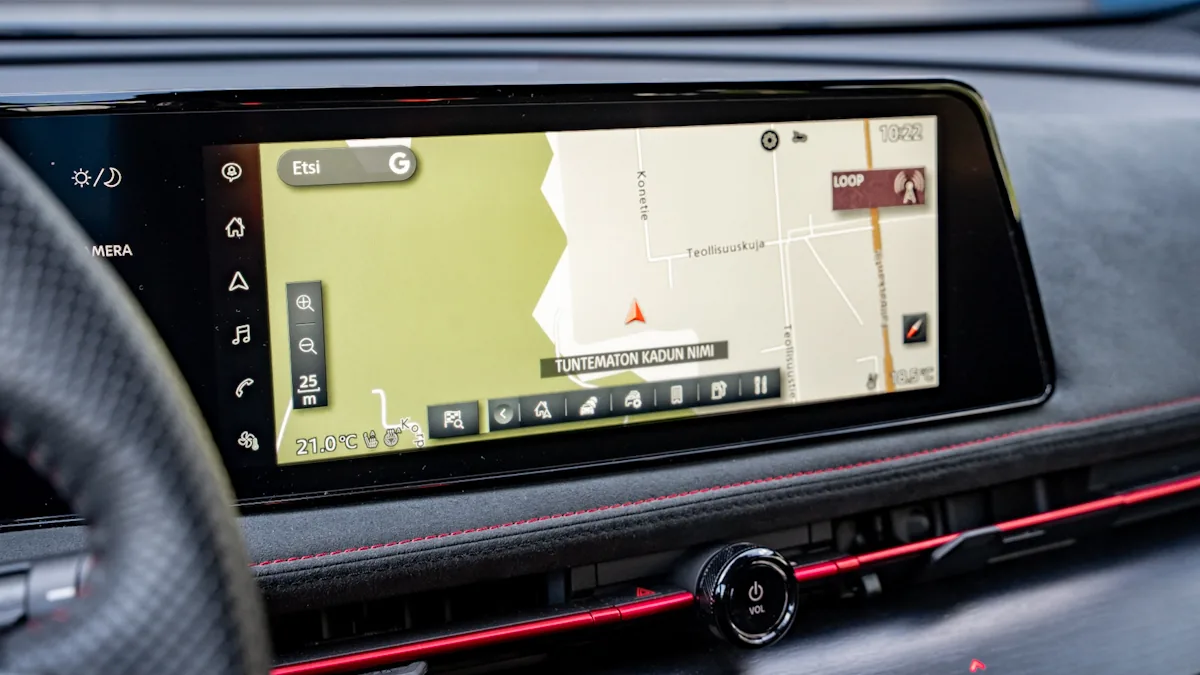
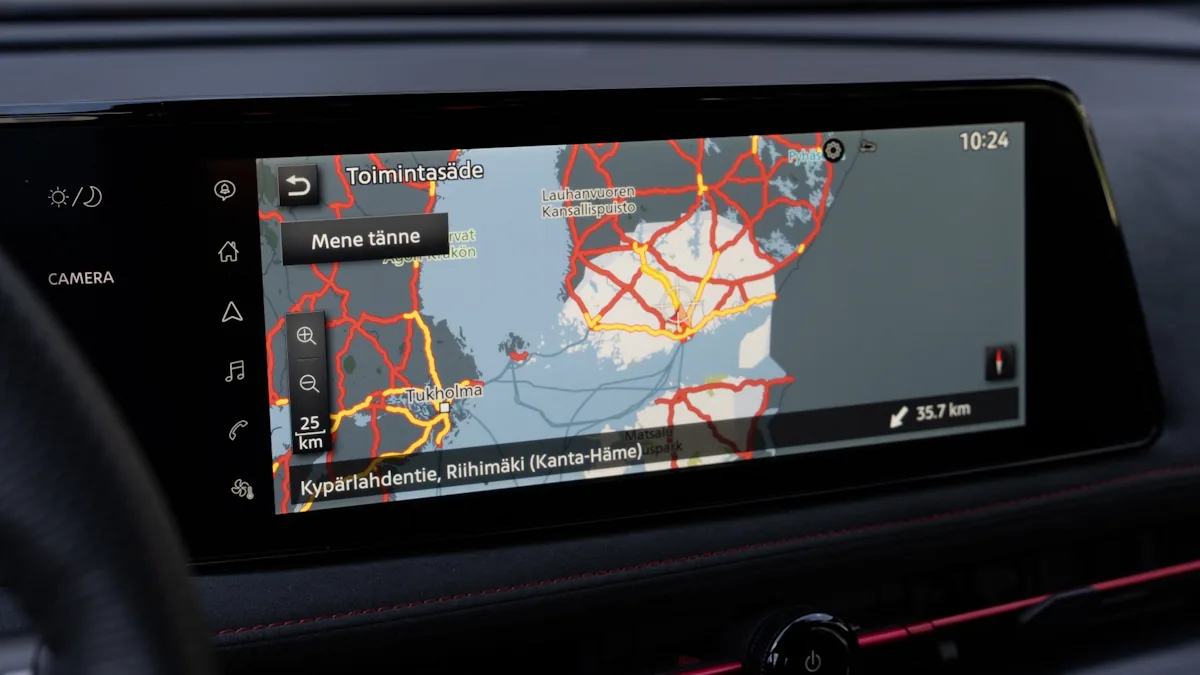
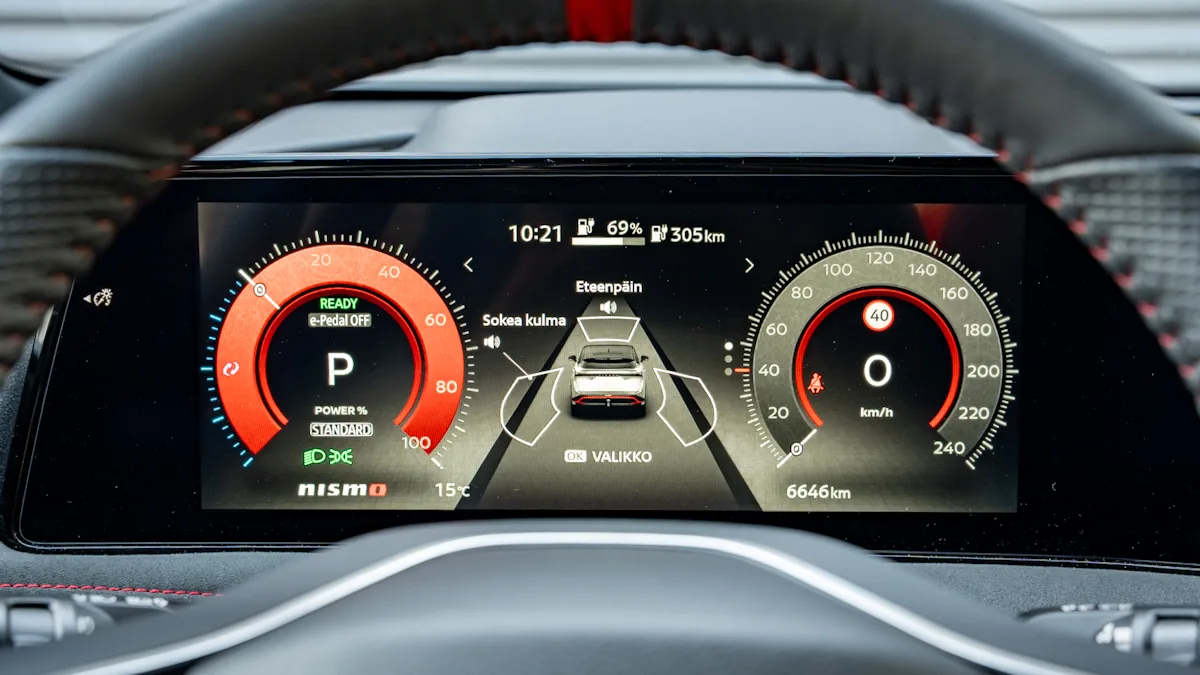
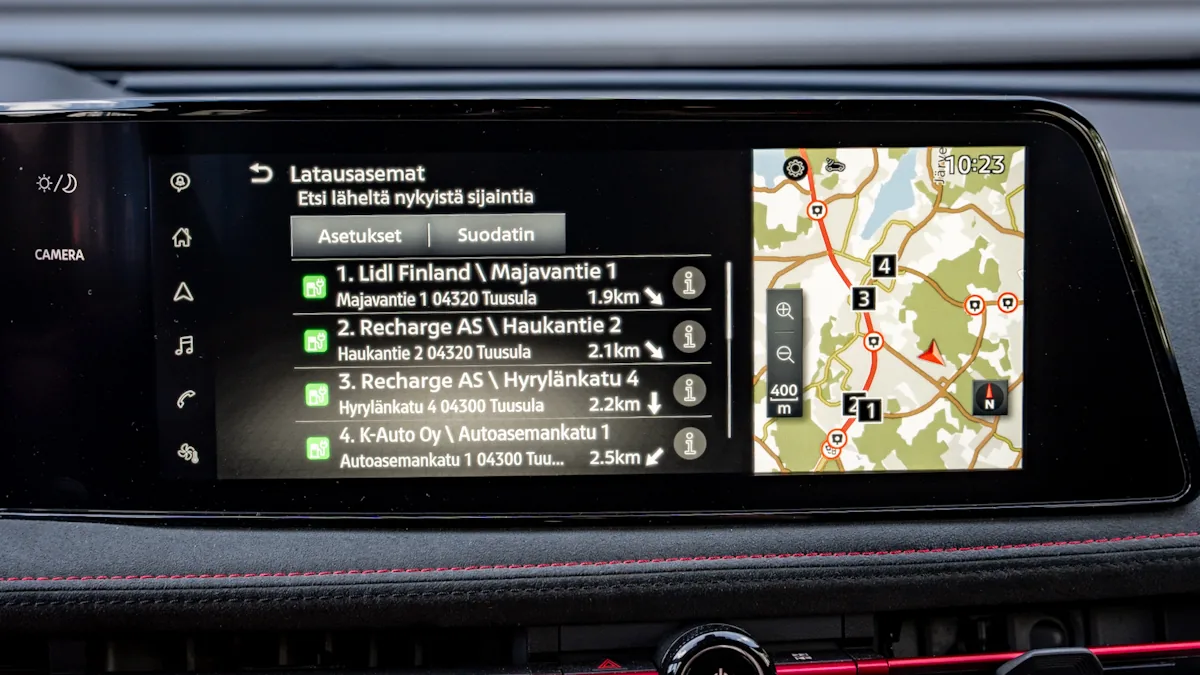
The interior user experience and ambience is also dampened by the dated look of the instrument panel and instrument cluster. On the other hand, after a moment’s reflection, one is reminded again of the design ideology the car represents – all the functions and rich menus on the displays are clearly displayed and function in a Japanese style where usability has taken precedence over visual appeal.
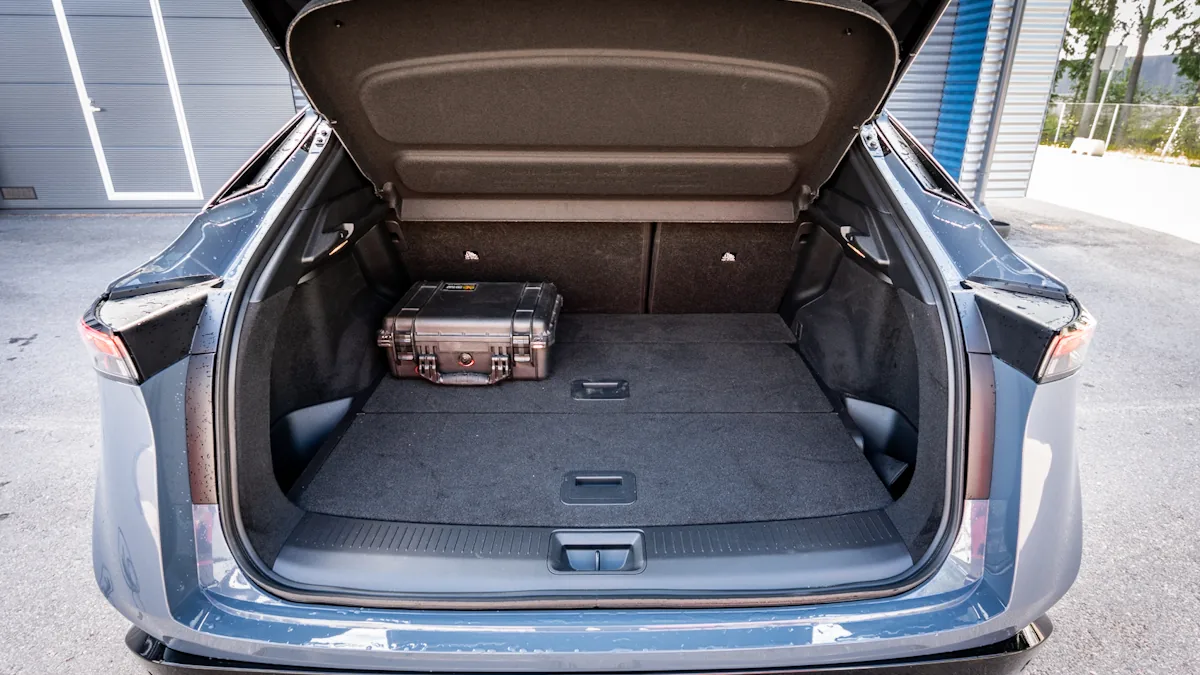
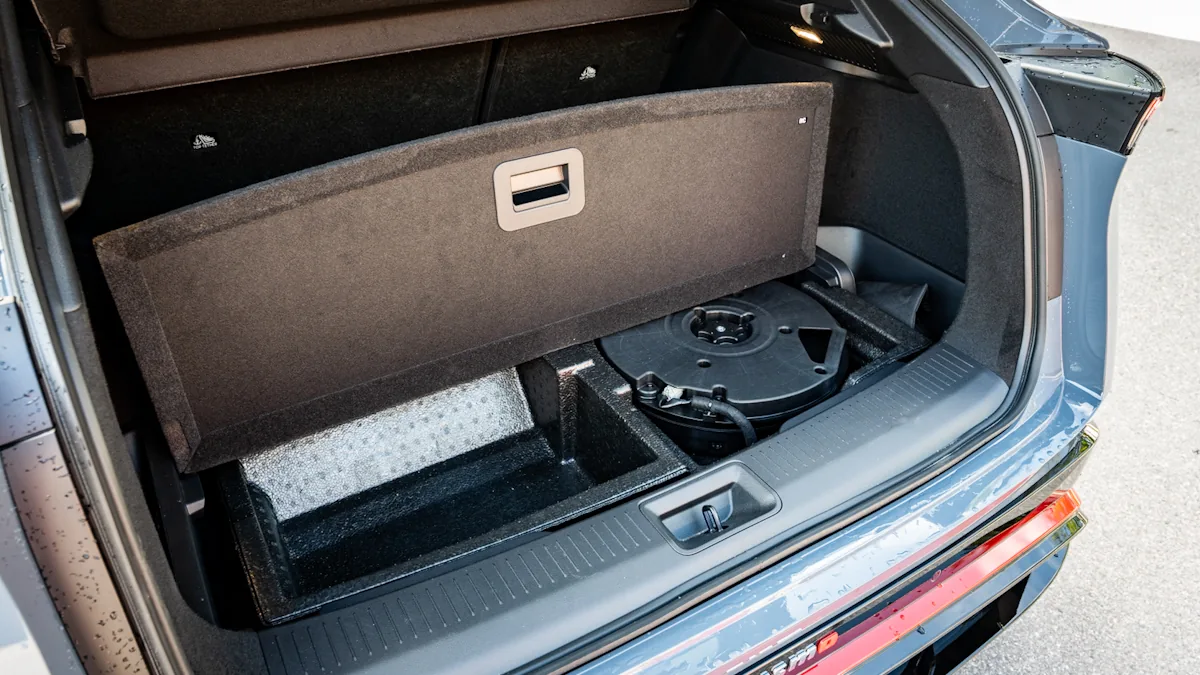
The interior is spacious, although the dark interior makes the cabin feel smaller than its size. There’s plenty of legroom for rear passengers – so much so, in fact, that the base Ariya, with its front-wheel-drive and larger boot, has only 468 litres of luggage space. For the four-wheel-drive Ariya and NISMO, the boot space has shrunk even further to 415 litres. Under the floor of the boot is a small storage area for the charging cable, tyre fitting kit and pump.
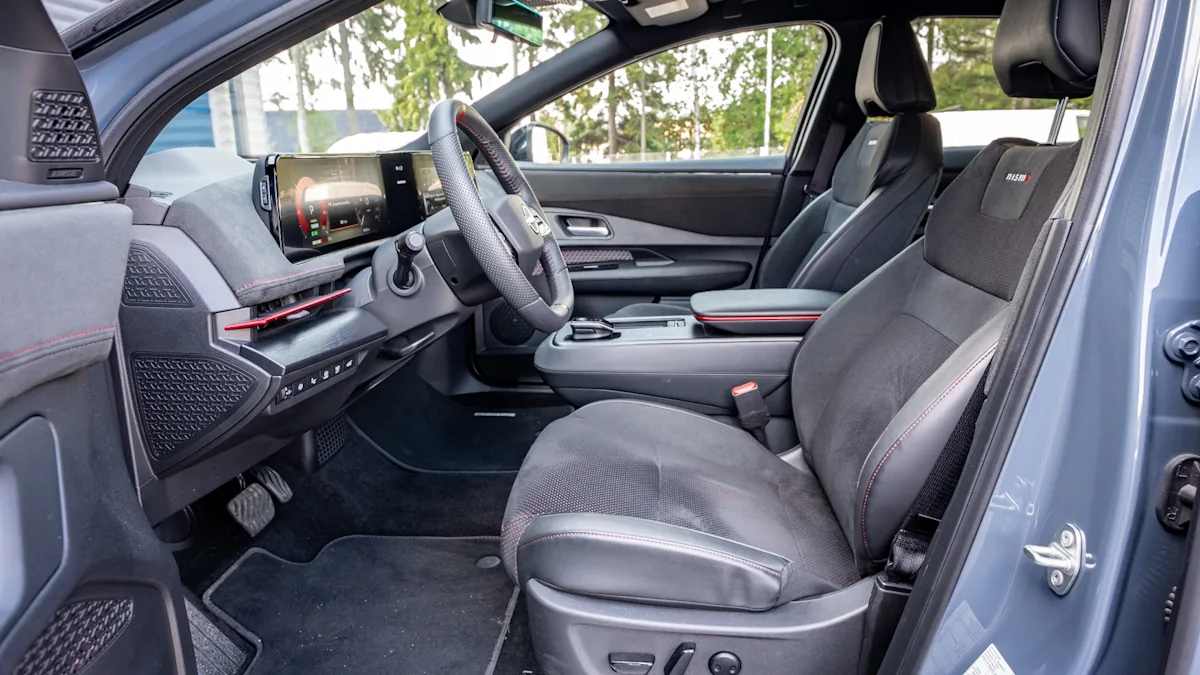
Despite the NISMO’s sturdy chassis, ride comfort is relatively comfortable. The interior is upholstered in synthetic suede and the front seats offer a good, supportive ride. In addition, the car proved to be quite quiet inside, even at highway speeds, and there was little extra hum in the cabin.
You could squeeze a little more in the cabin
Consumption measurements during the test drive coincided with outdoor temperatures that were quite optimal for electric driving. With temperatures ranging from around 10 to 20 degrees Celsius, the Ariya NISMO consumed 20-25 kWh/100km at varying speeds. As such, these figures are quite good compared to the manufacturer’s claimed combined consumption of 24.5 kWh/100km, but are on the high side compared to many competitors. On the motorway at 100 km/h, electricity consumption was a surprisingly modest 21.1 kWh/100km compared to other measurements.
Thanks to its large battery, the Ariya NISMO can travel around 400 km on a single charge in summer conditions, according to the test drive results. The manufacturer claims a WLTP figure of 417 kilometres for the NISMO. Ariya’s base models with the same size battery have a WLTP of over 500 km.
The much higher WLTP range of the base model is not the only factor that makes you wonder which version of the Ariya to buy. A notch below the NISMO and €1,000 cheaper, the price list includes the four-wheel drive Ariya Evolve trim level.
The Evolve brings with it a number of comfort-enhancing features such as air-conditioned seats, electric steering wheel controls, opening glass roof and adaptive LED headlights. In addition, the Evolve has a towing capacity of 1,500 kg, compared to zero on the NISMO.
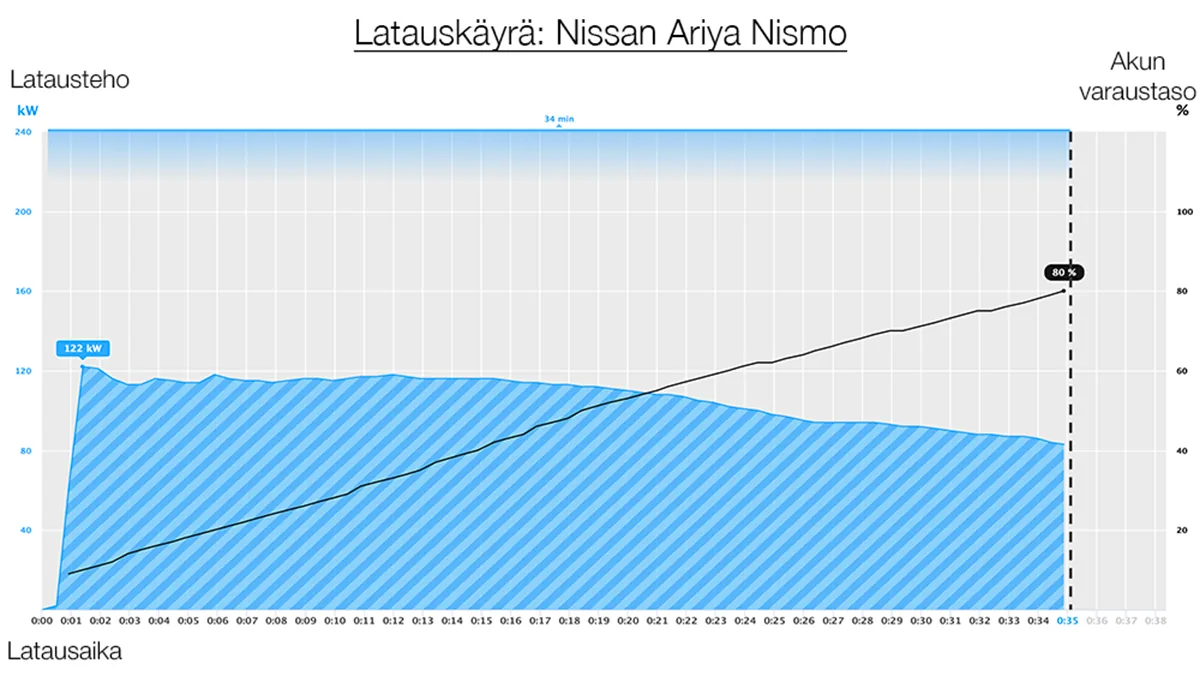
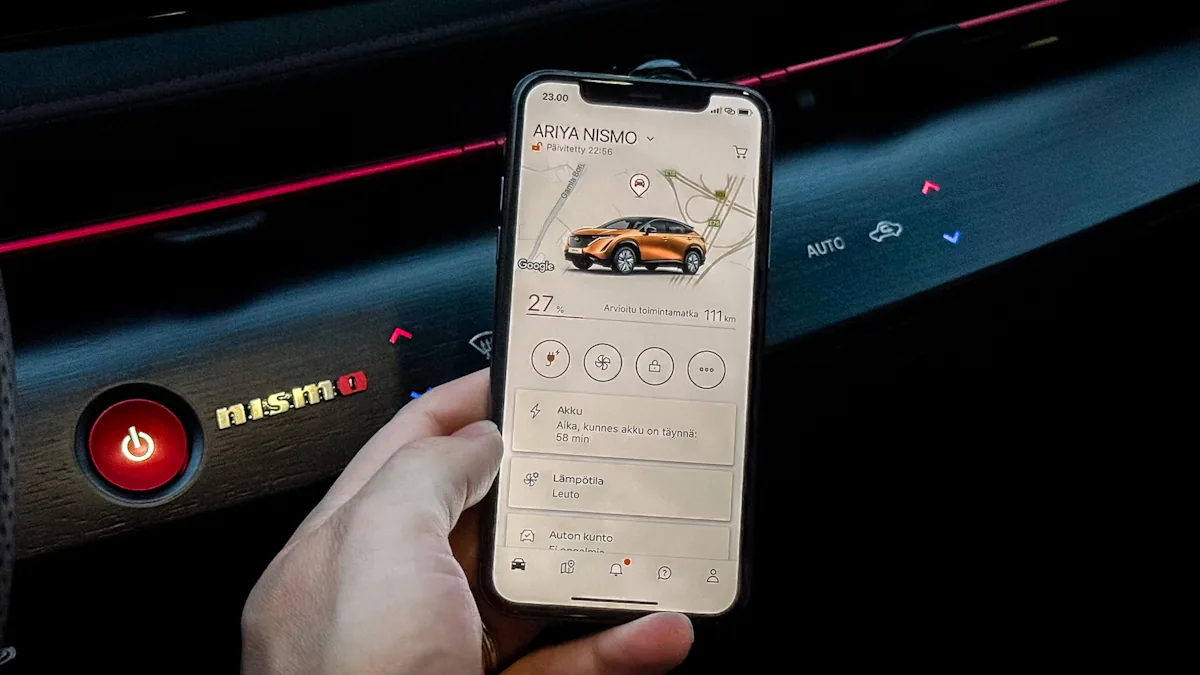
In terms of charging and cruising capabilities, the Ariya proves to be a confident performer, as is its nature. The charging curve and charging performance are not spectacular at peak values, but the power is transferred to the battery at a steady and deadly pace. In a charge test (SOC 10->80%), the battery was full in 33 minutes, which means an extra 100 kilometres in 10 minutes for a road trip.
Ariya scores big extra points for charging with the 22-kilowatt internal charger that comes standard on all models, which significantly speeds up battery recharging during a shopping trip, for example. A feature that is still incredibly often missing from competitor models.
Conflicting emotions
The NISMO, with its familiar car models, raised expectations very high before the test drive. However, the Ariya NISMO, with its high-quality interior, did not live up to the expectations that the model had promised. There’s nothing major wrong with the car per se, but when something’s missing, something’s missing – the Ariya NISMO’s biggest disappointment is probably the generally lacklustre driving experience.
The brand has a history of being shone too brightly in motorsport, and it may not even be possible to bring the brand’s reputation to fully electric street cars. The average consumer is likely to end up with a ton cheaper and better-equipped Evolve trim level at Ariya’s dealerships.
Nissan Ariya e-4ORCE 87 kWh. NISMO
Total maximum power: 320 kW, 435 hp.
Total maximum torque: 600 Nm.
Acceleration: 5.0 sec (0-100 km/h).
Driving battery capacity (gross): 90 kWh.
Driving battery capacity (net): 87 kWh.
Manufacturer’s declared combined energy consumption: 24.5 kWh/100km.
Manufacturer’s declared range: 417 km (WLTP).
Electricity consumption during test drive: 20-25 kWh/100km (10-17°C).
Test-driven range on a single charge: 435-348 km.
Electricity consumption during test drive at 100 km/h: 21.1 kWh/100km (15°C)
Maximum charging power (DC): 130 kW.
Maximum charging power (AC): 22 kW.
Kerb weight: 2277 kg.
Maximum total mass: 2640 kg.
Luggage compartment: 415 l.
Traction: four-wheel drive.
Towing capacity (with/without brakes): 0 kg.
Starting price of the test drive model: 58 960 euro
Price of the test car with options: EUR 58 960
Warranty: car 3 years / 100,000 km. ; battery 8 years / 160 000 km.
Warranty on electric car parts: 5 years / 100 000 km.
Country of manufacture: Japan
Photo: Antti Järveläinen.
How much power does the Nissan Ariya NISMO deliver?
What is the energy consumption of the Ariya NISMO?
How far can the Ariya NISMO travel on a single charge?
Does the Ariya NISMO match its historic performance heritage?
What are the main advantages over the standard Ariya?