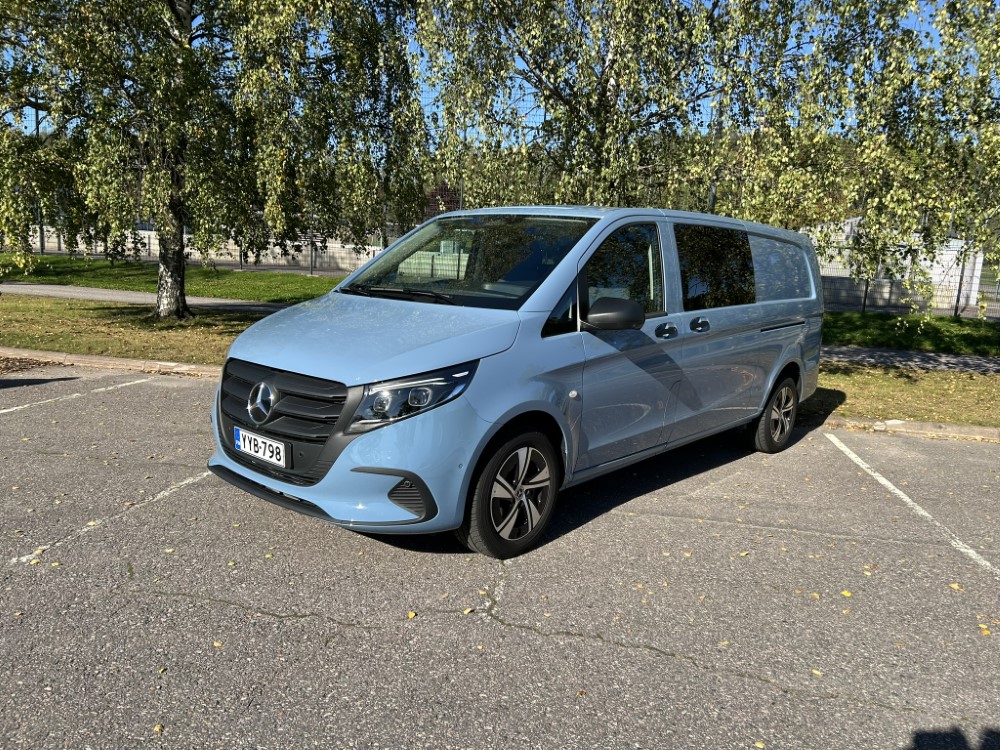
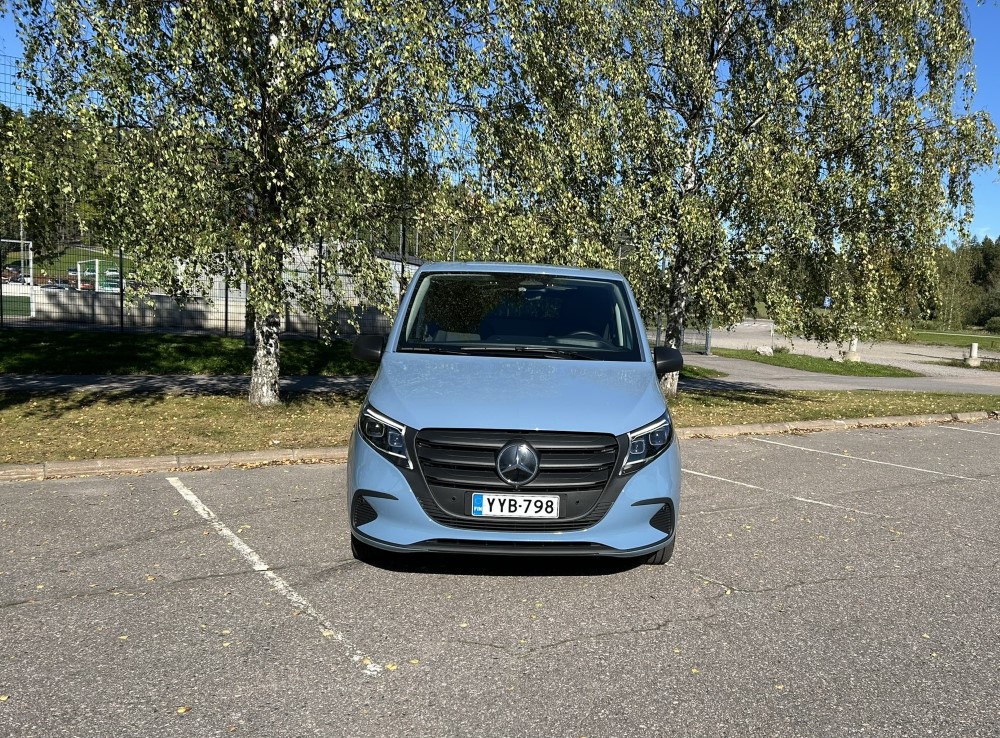
A van is always a van, but more and more vans are now very much like cars. This is also the case with the Mercedes-Benz Vito.
- Engine
- Diesel
- Power
- 120 kW (163 hp)
- Consumption
- 5.6 l/100km
- Drivetrain
- 4WD
- Seats
- 2
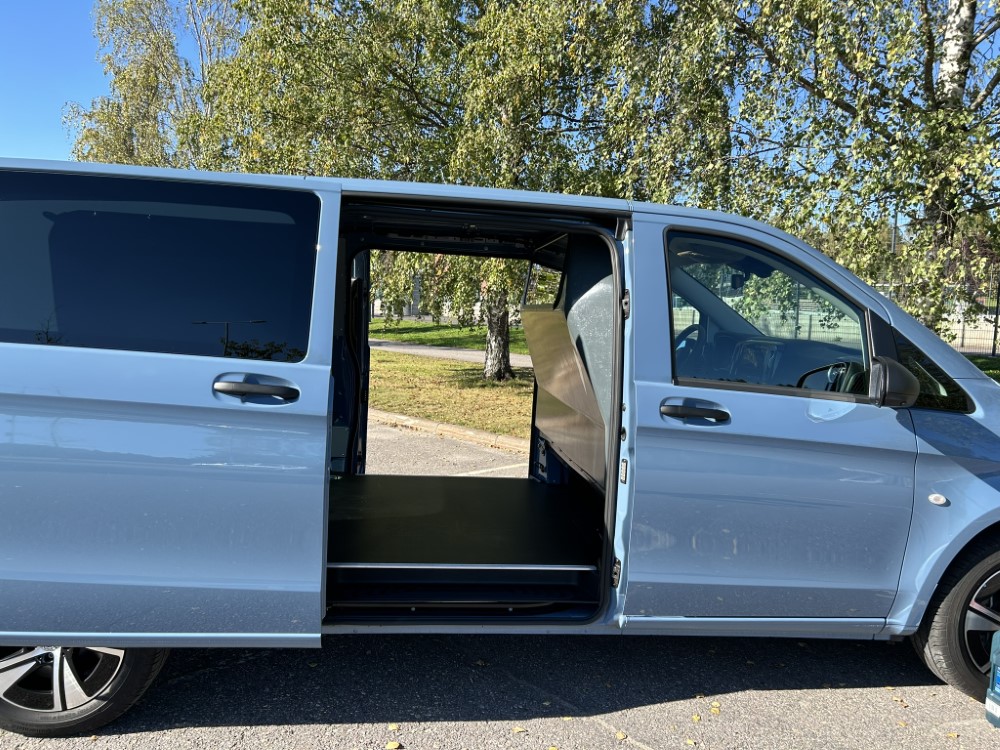
The test drive was of the longest four-wheel-drive model in the Vito range, with all the goodies. The boot is over three metres long, which means 6.6 cubic metres. The load capacity is 1,080 kilograms. Even with the optional extras, the price comes to around EUR 90 000. It can be said that the Vito is the nobility of vans.

This time the car was not tested with a heavy load, but was mainly driven on the road with a light load.
The Vito is available in a wide range of models. The test drive was a model with a two-seater cab. A three-seater version is also available, of course. The traction is either two or four-wheel drive.
The cabin has undergone a significant change with the new MBUX system. It brings a host of new functions.
The dominant element in the cockpit is the 10.25-inch high-resolution touchscreen. Below the centre screen are buttons for heating and air conditioning, among other things.
The driver’s instrument panel now features a 5.5-inch colour display.
The two-seat design allows, among other things, an improved second driver’s seat. This makes the car ideal for long journeys for both driver and co-driver.

Modern vans have almost all the same driver assistance systems and safety equipment as passenger cars. This is also the case with the Vito.
The systems work well, and the lane departure warning system, for example, was commendably smooth.
The car also has a speed warning system that beeps as soon as the speed exceeds the speed limit. However, this function can be easily switched off, so that the car does not always beep when the speedometer exceeds the speed limit.
The test car’s engine has 163 horsepower. This is enough power to keep up with the speed of the traffic flow.
The car’s WLTP fuel consumption is claimed to be 5.6 l/100 km, but the test drive didn’t quite reach that. While driving, consumption was between 7 and 8 l/100 km.

A small special feature of the car is the digital rear-view mirror. The mirror also has the feature of a traditional mirror, of course, so you can choose the one that works best for different situations. For example, in dark, rainy weather, the traditional mirror is more useful.
A wide range of active safety features
Active safety equipment now includes as standard features such as active lane departure warning, crosswind assist, speed limit assist, vigilance assist, headlamp assist, cruise control, heated windscreen washer, rain sensor and blind spot warning.
A reversing camera is standard, along with pedestrian detection when reversing.

Active Brake Assist detects crossing traffic, oncoming traffic in the same lane, oncoming traffic turning left at an intersection, and vehicles travelling in the wrong direction. As an option, the Vito is also available with Active Distance Assist.
A new feature is the optional Multibeam led headlights. The light is produced by 84 individually controlled LED light sources, and the beam pattern produced by the system is adapted to the lighting conditions, the prevailing traffic situation, the weather and the driving environment. Control of the light sources is based on the use of a multi-function camera in the windscreen and information from the navigation system.
Four engine options, three body lengths and two traction modes
The engine range includes four four-cylinder diesel options: 110 CDI (75 kW), 114 CDI (100 kW), 116 CDI (120 kW) and 119 CDI (140 kW).
The smallest engine is 102 hp, while the top of the range is the 190 hp engine. There is also a 136 horsepower version and a test-driven 163 horsepower model.

Three body lengths are available, and customers can choose between a 9-speed automatic or a 6-speed manual transmission. Drive options include rear-wheel drive or four-wheel drive continuously variable. The maximum load capacity is 1 135 kg.
The starting price for the model range is EUR 48 200, with the test-driven version without options starting at EUR 69 600 and with the optional extras the price rises to around EUR 90 000.
Mercedes-Benz Vito 116 CDI A3
- 4-cylinder diesel engine 1 950 cm 3, 163 hp, 380 Nm
- 9-speed automatic gearbox
- WLTP consumption 5.6 l/100 km
- Length 5 370 mm
- Width 1 928 mm
- Height 1 915 mm
- Wheelbase 3 430 mm
- Luggage compartment 6,6 m3
- Load capacity 1 080 kg
- Trailer 2 000/750 kg
- Price from around 48 200 €
- Price of the test vehicle around € 90 000