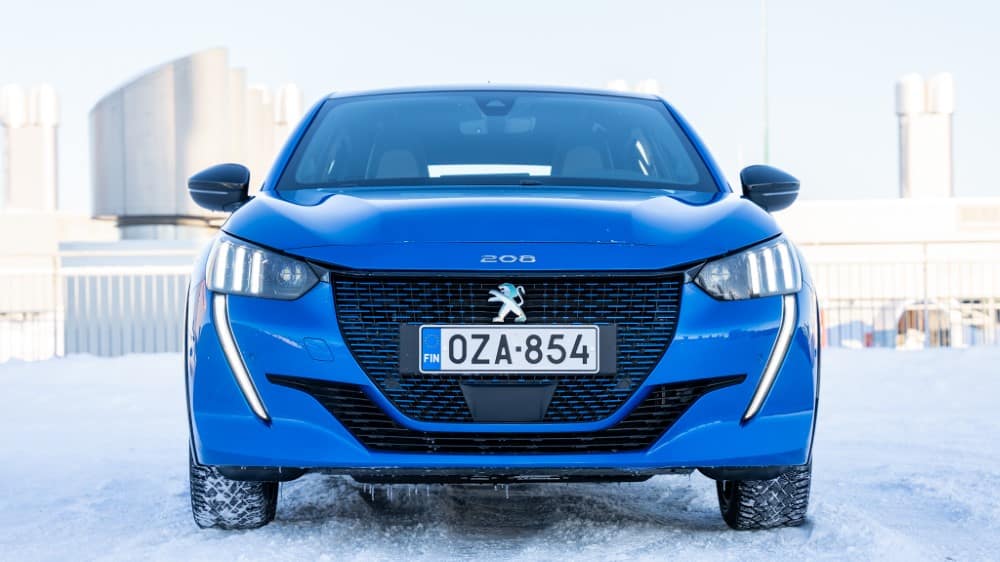
The sportier GT version of the Peugeot 208 electric family is a great example of what electric cars in a small size can do best.
- Engine
- Electric
- Power
- 100 kW (136 hp)
- Range
- 339 km (WLTP)
- Consumption
- 16.4 kWh/100km
- Drivetrain
- FWD
- 0–100 km/h
- 8.1 s
- Battery
- 50 kWh
- Seats
- 5
With its nimble chassis, electrifying steering from the small steering wheel, distinctive looks and the instant power of the electric motor, the Peugeot e-208 is a joy to drive.
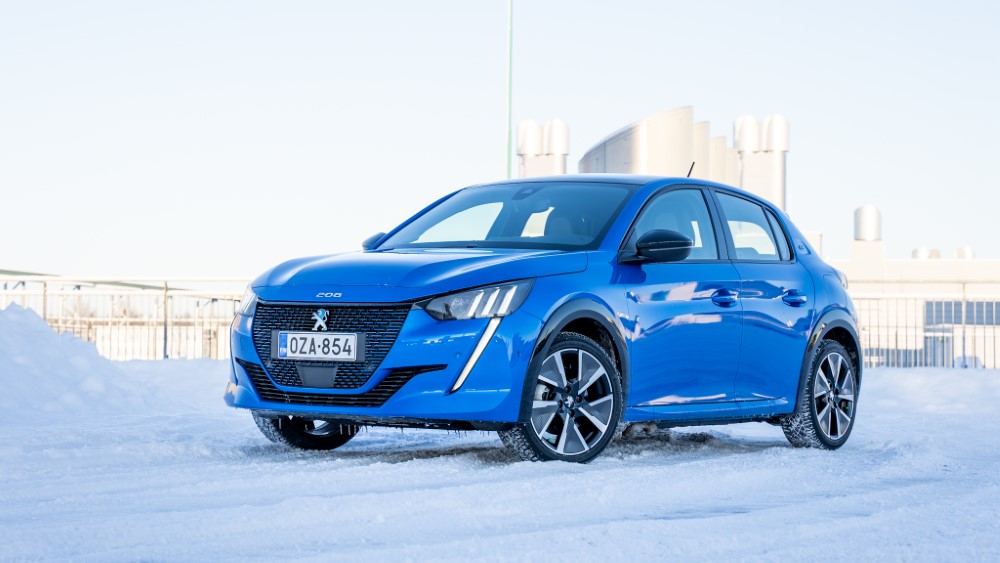
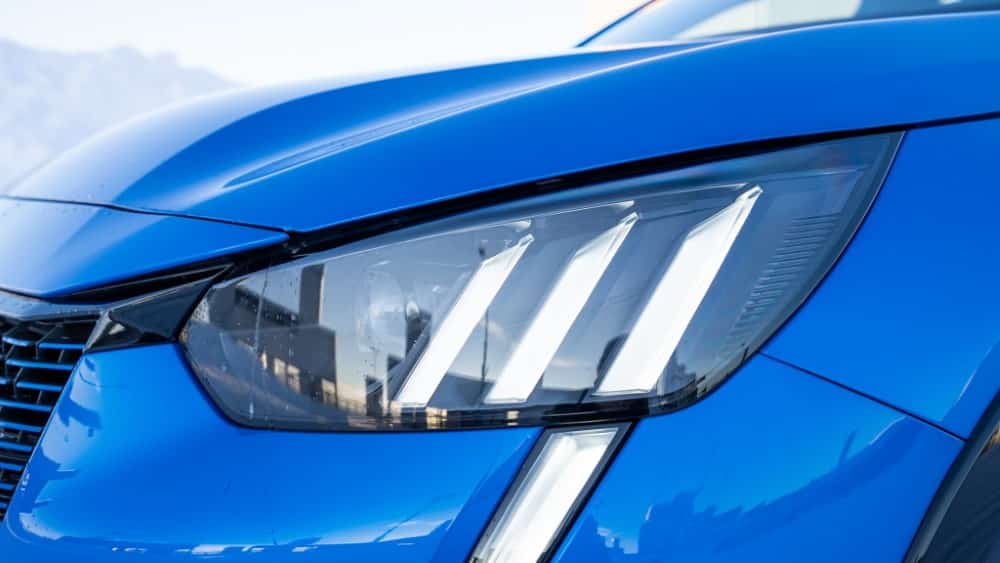
Front lights like lion’s tusks
When it comes to small cars, standing out often seems to be a challenge. Many brands succumb to boring styling that, at worst, is almost indistinguishable from other makes and models.
the e-208’s design is anything but boring, with attention to detail.
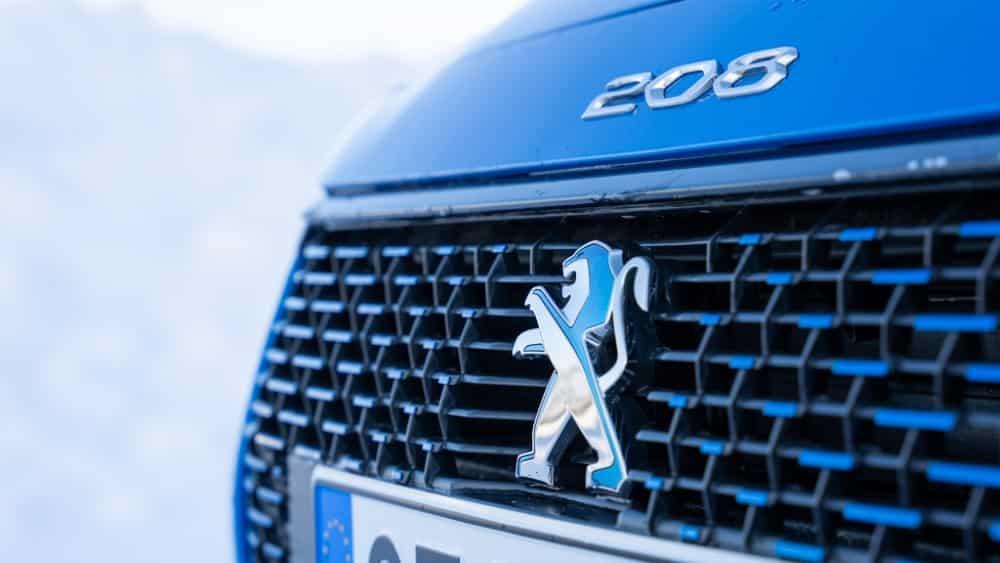
The front bumper is adorned with stylish daytime running lights, which, together with the large electric blue front mask, give the e-208’s front end a distinctive and larger appearance.
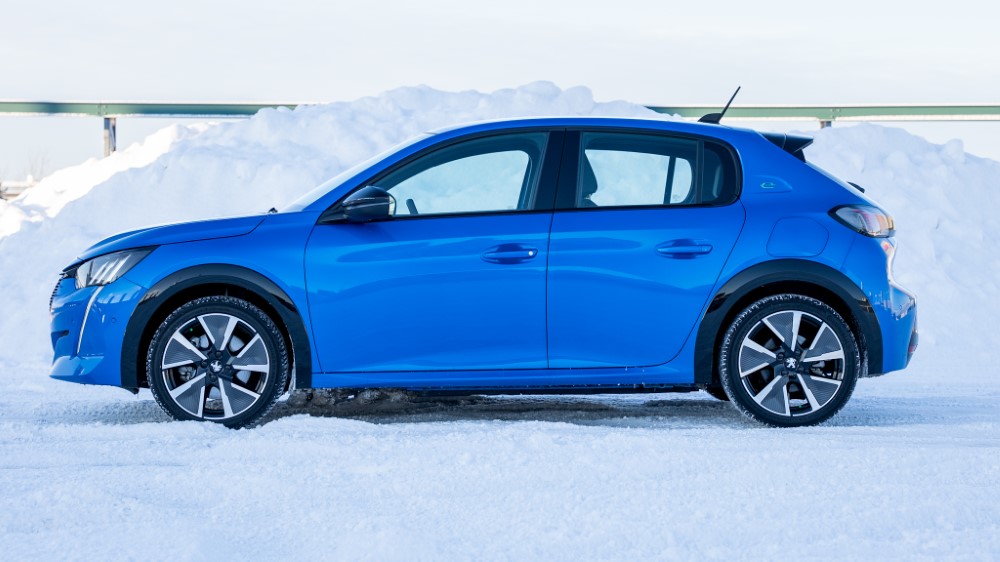
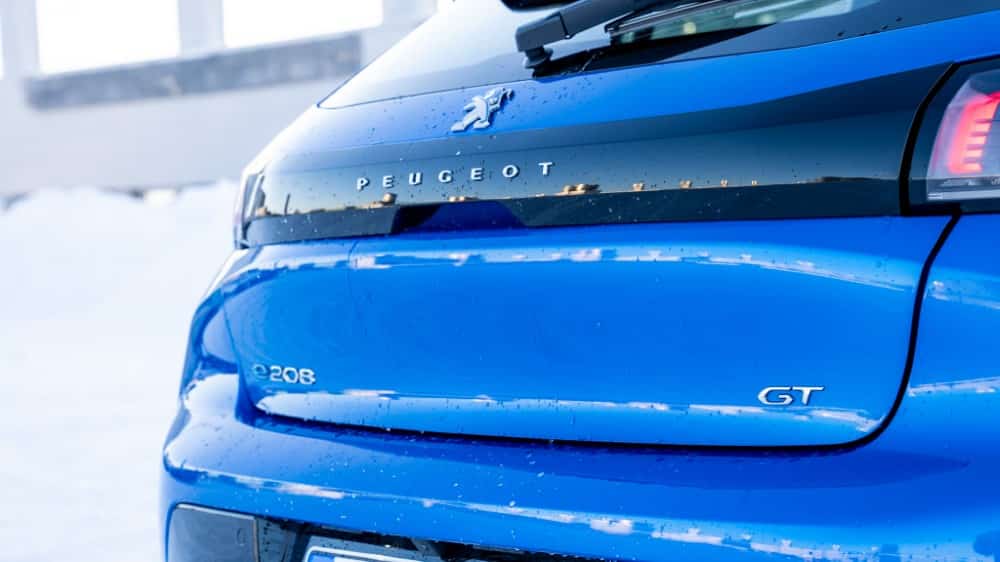
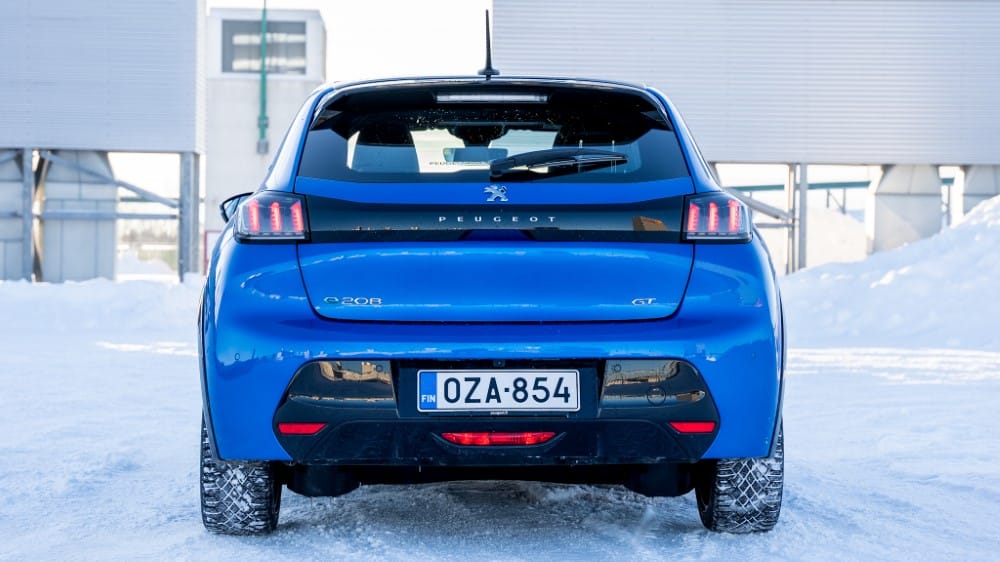
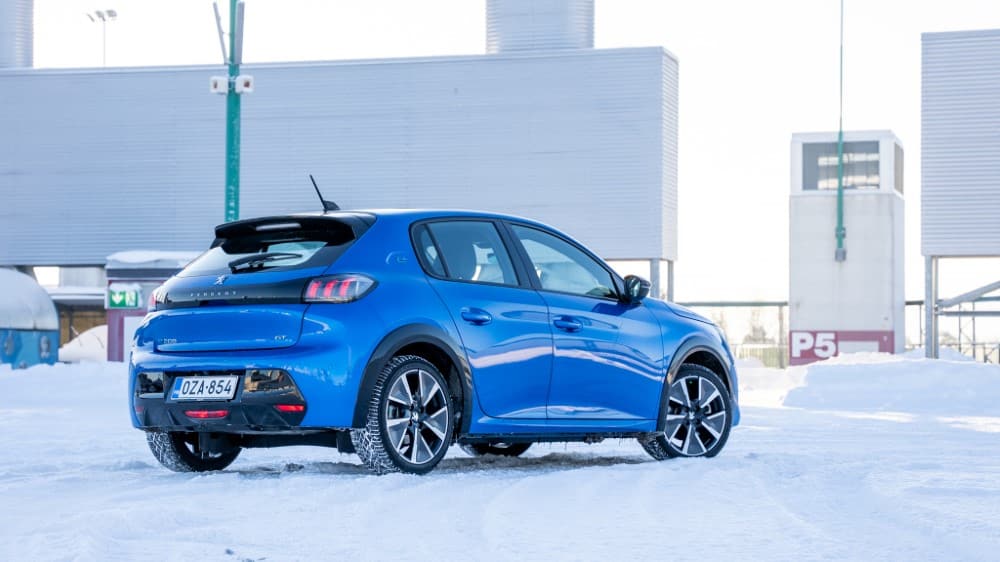
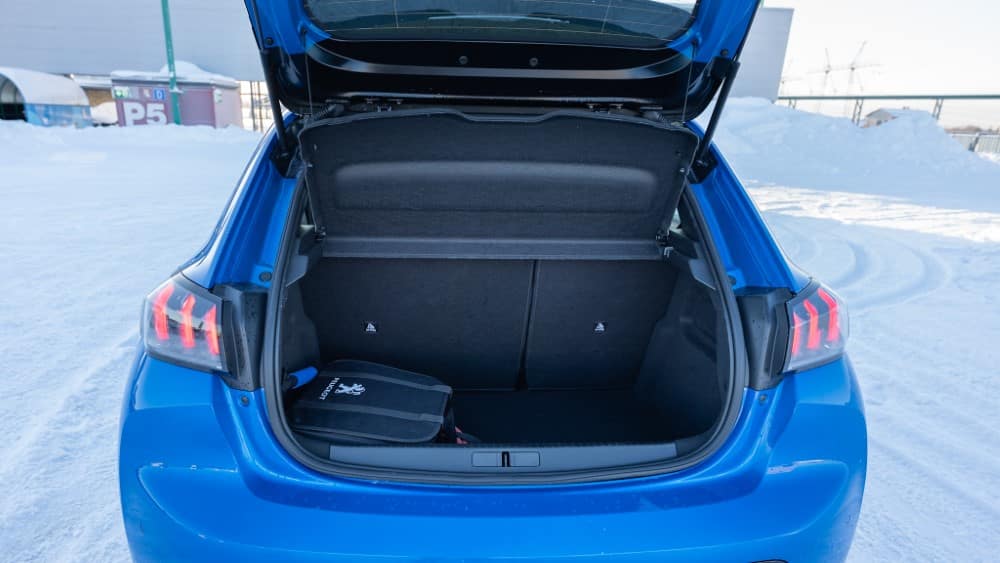
The rear styling has not been compromised. The rear bumper, lights and tailgate are all sporty, in keeping with the GT model. The only thing missing are the large exhaust tips.
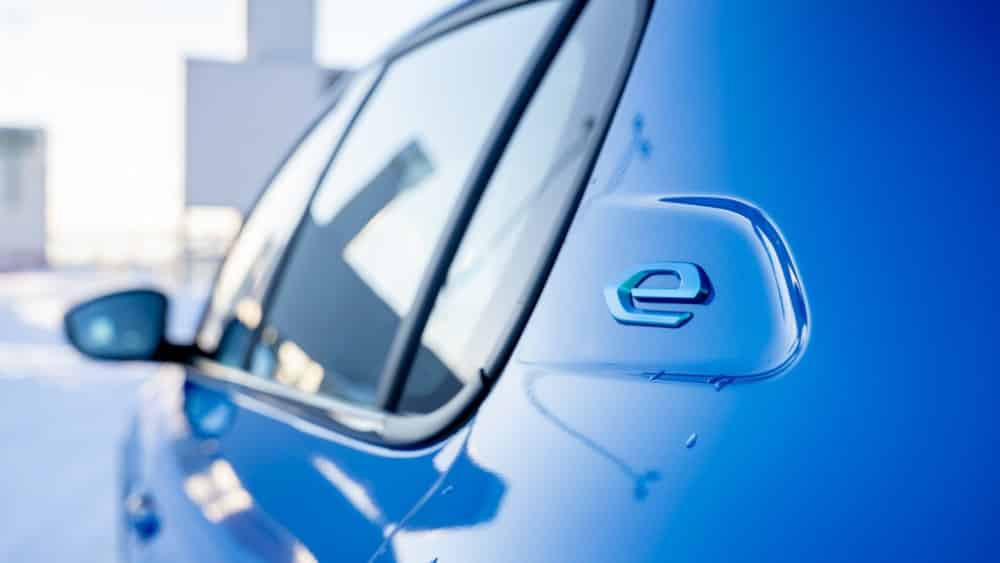
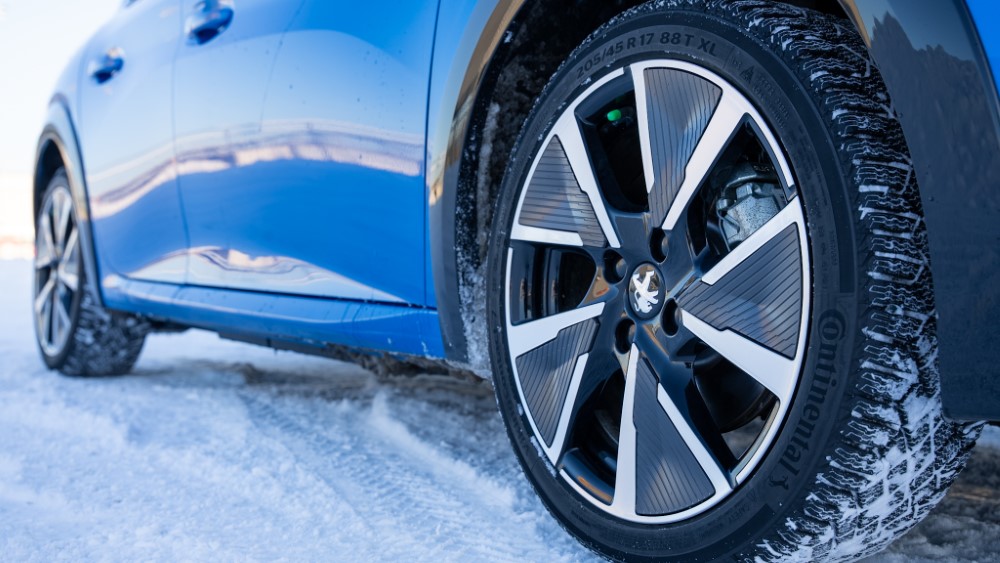
The fenders are styled with large black mudguards in contrast to the body colour. The compact, just over four metres in length has been given a larger and more imposing shape with personal details.
Customizable 3D instrumentation
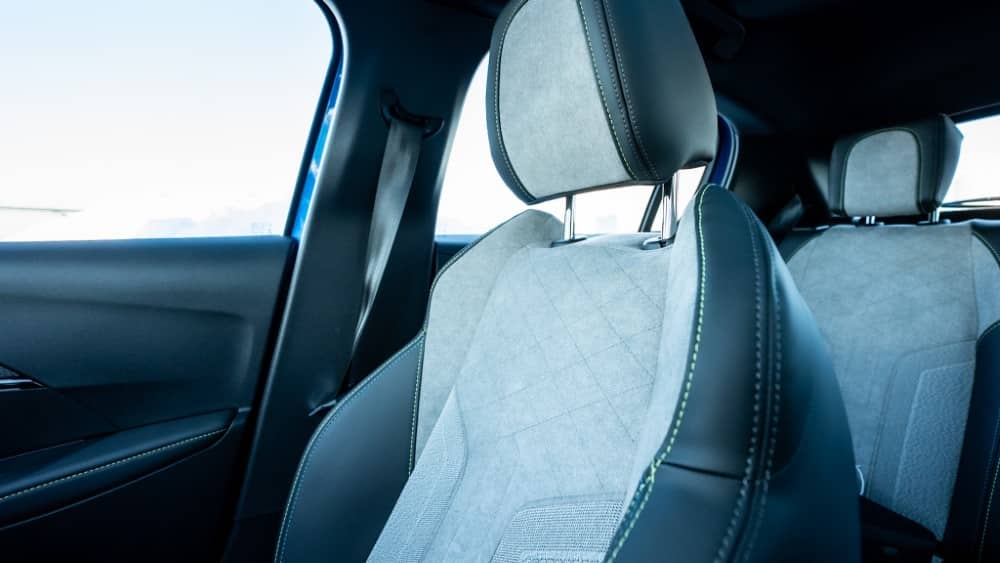
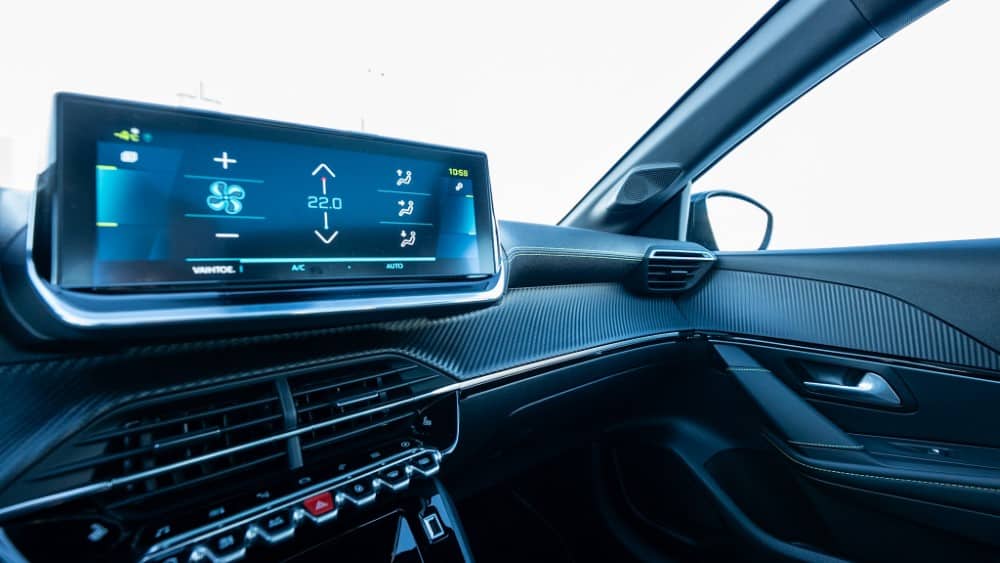
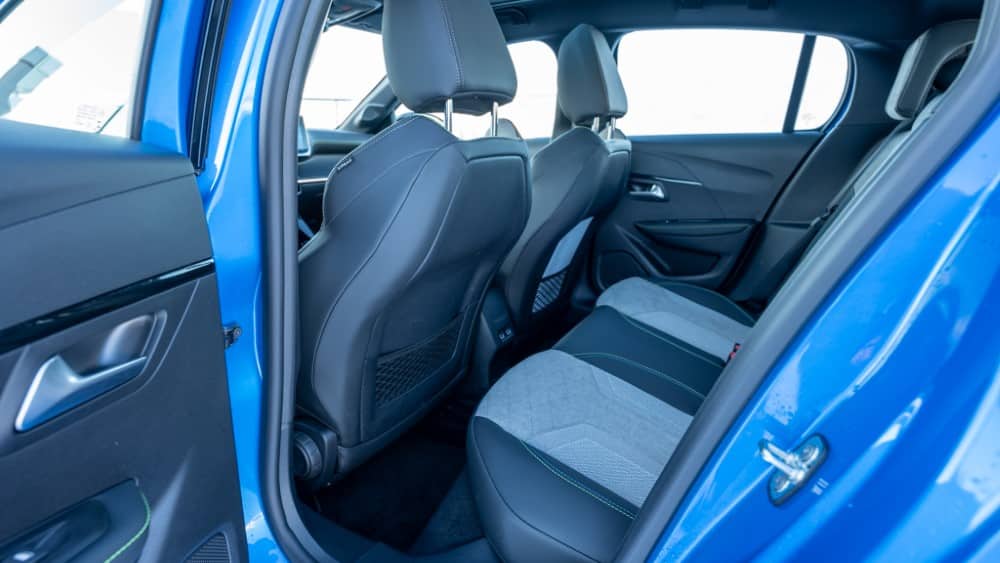
The materials inside feel of high quality. In the GT spirit, the cabin features carbon fibre upholstery and colourful stitching on the steering wheel and seats. While black is the dominant colour inside, the blue, green and chrome details in the cabin bring life to the darkly softened cabin.
The use of colour is not scarred by the instrument panel and the dashboard inter-screen.
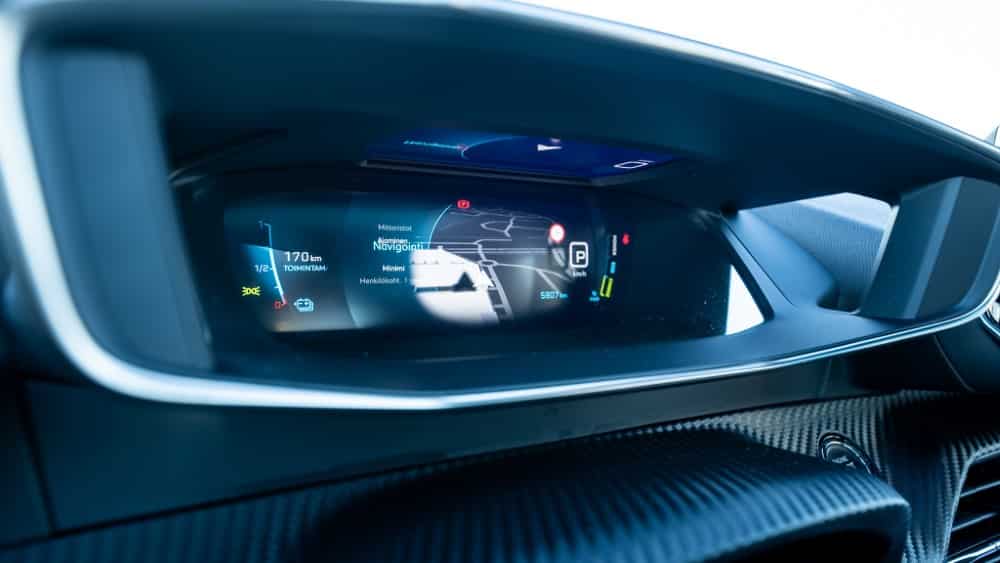
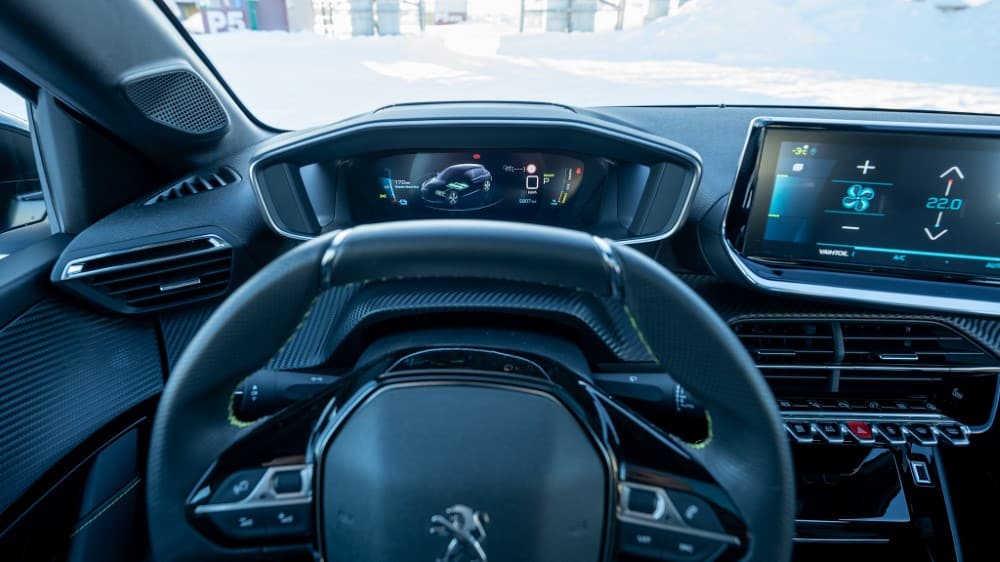
The instrument cluster looks strange at first. The information in the centre of the instrument cluster is closer, with the various interchangeable graphics creating a three-dimensional effect and looking much more interesting than the ‘normal’ instrument cluster. It was difficult to capture the three-dimensionality in pictures, but in person the look is convincing!
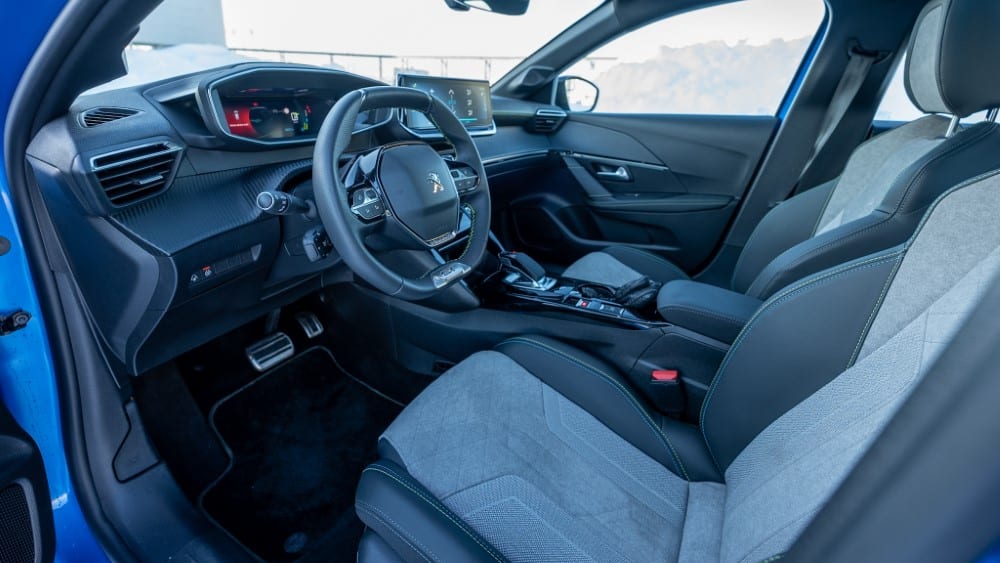
The central part of the instrument panel features graphics for navigation, power consumption or assistance systems, for example. The instrument cluster as a whole has been kept pleasantly simple and easy to read. Only the essential information is displayed.
Like the Peugeot, the e-208’s steering wheel is significantly smaller than the average steering wheel, allowing for faster and sharper movements. The instrument cluster is viewed over the steering wheel, so that initially the steering wheel feels almost lap-shaped.
Click here to read other Peugeot test drives.
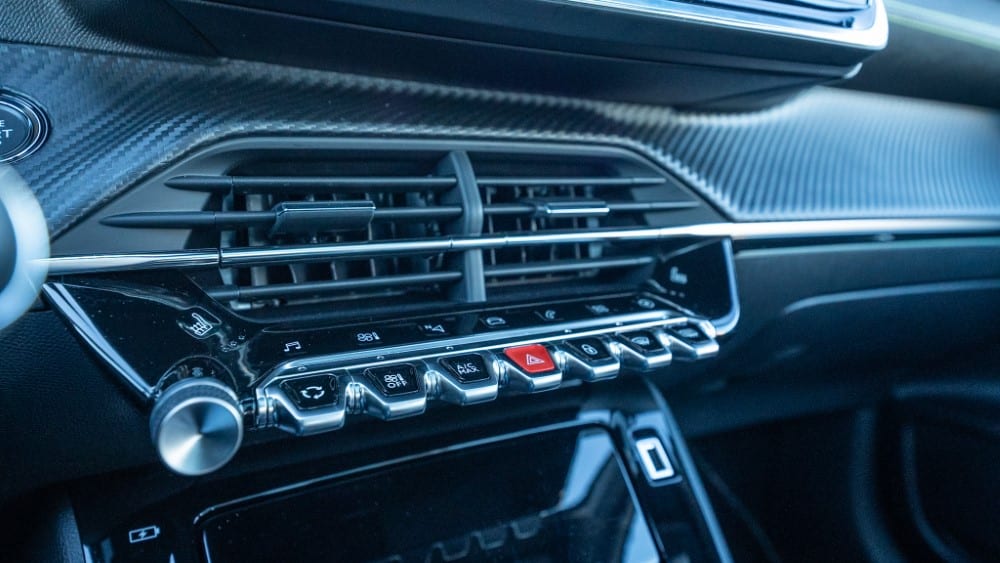
On the dashboard, below the instrument panel, there are piano key-like switches for the climate control and emergency lights. In front of the switches are touch buttons for other systems such as navigation, music, phone and power settings.
In terms of usability, these ‘piano keys’ and touch buttons are not the best, but the appearance is beautiful and personal.
The best thing is drivability
A small steering wheel combined with a snappy chassis and good all-round driveability are impressive. There are three driving modes: eco, normal and sport. The normal mode is smooth and the car behaves in a sporty way.
The sport mode makes the electric motor’s response to the accelerator pedal a little too harsh on slippery winter roads. The traction control easily gets involved, making the ride feel even more sluggish in normal driving mode. In summer weather, the situation is certainly different.
In light frosts in winter, electricity consumption ranged between 21 and 26 kWh/100 km. According to Peugeot, the car’s 50 kWh battery should provide up to 339 operating kilometres.
With an available battery capacity of less than 50 kWh, the operating range promised by Peugeot would require consumption figures of around 14 kWh/100 km. These figures are not possible in winter conditions, but in summer a 300 km trip should not be impossible.
Peugeot e-208 GT
- Electric motor power: 100 kW. / 136 hp.
- Torque: 260 Nm.
- Driving battery capacity: 50 kWh
- Indicated range on a single charge: 339 km.
- Test-driven range on a single charge: 220 km.
- Acceleration: 8.1 sec (0-100 km/h)
- Combined consumption: 16.4-16.5/100km.
- CO₂ emissions: 0 g/km.
- Test fuel consumption: 21-26/100km.
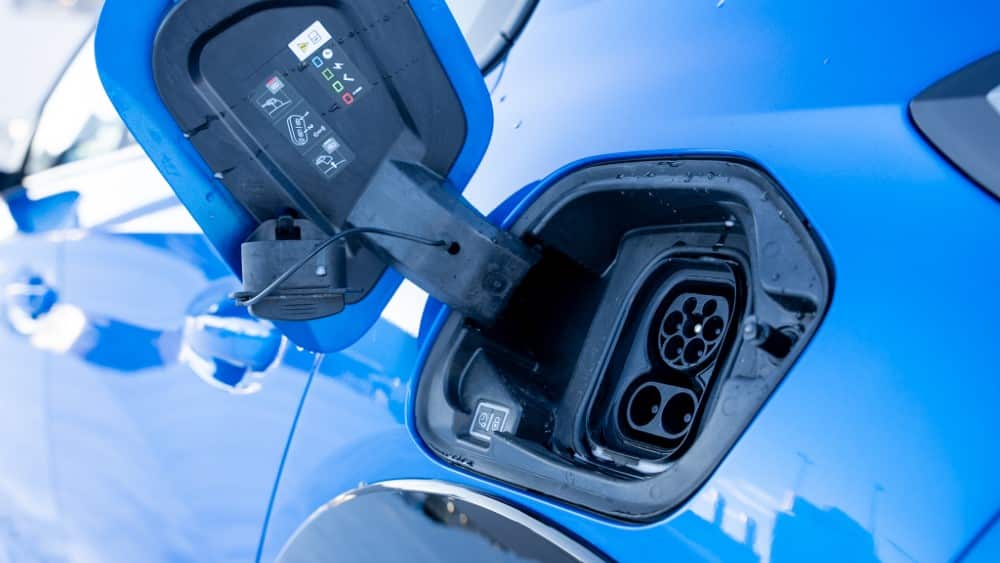
- Maximum charging power (AC): 11 kW
- Maximum charging power (DC): 100 kW
- Deadweight: 1530 kg.
- Drive mode: front-wheel drive
- Luggage compartment: 265 l.
- Starting price: 37 250 euro (Active Pack equipped: 33 500 euro)