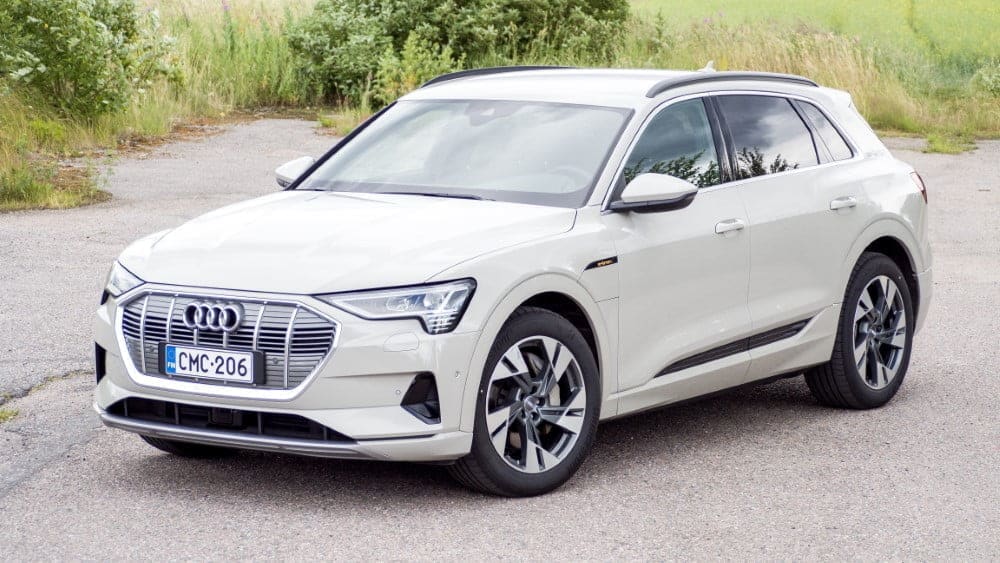
Anticipation is huge with the arrival of Audi’s new all-electric SUV e-tron. With a curb weight of more than 2,500 kilos, you can feel it immediately behind the wheel.
- Engine
- Electric
- Power
- 265 kW (360 hp)
- Range
- 436 km (WLTP)
- Consumption
- 23.1 kWh/100km
- Drivetrain
- AWD
- 0–100 km/h
- 6.6 s
- Top Speed
- 200 km/h
- Battery
- 86 kWh
- Seats
- 5
- Price
- from €87,028
Audi has not compromised on quality with the e-tron. In terms of materials and finish, the e-tron is at the top of the Audi range. Tire noise and airflow hiss are conspicuous by their absence.
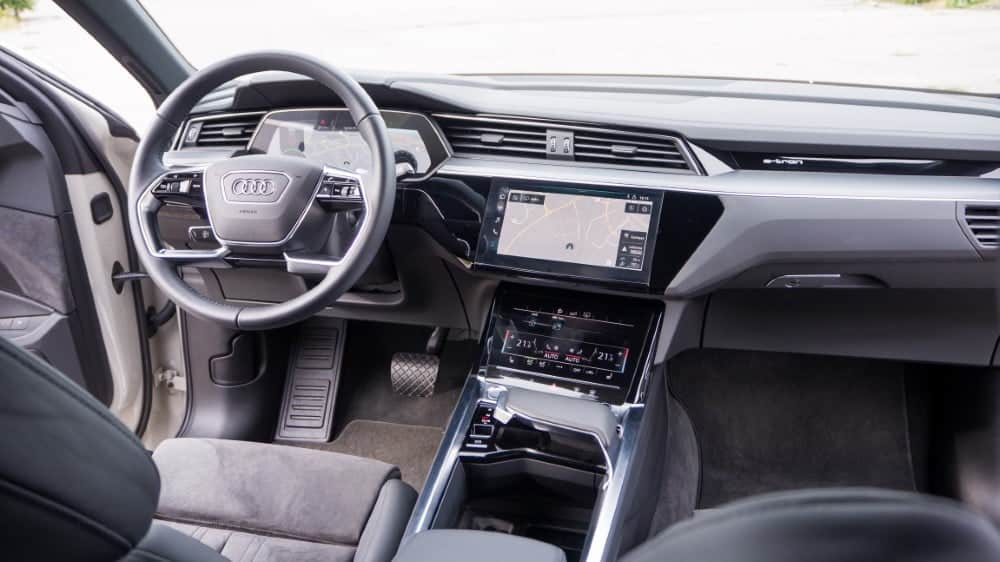
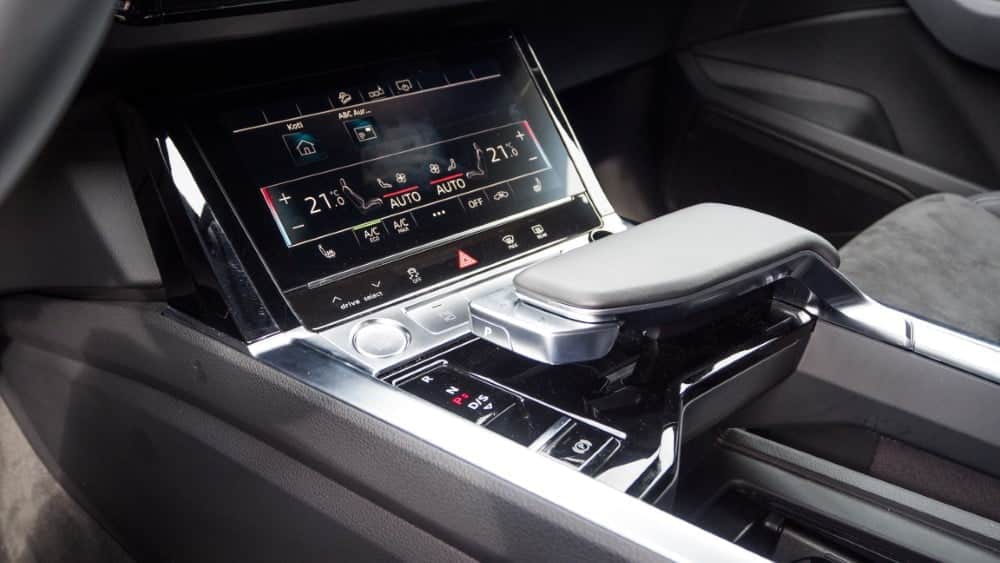
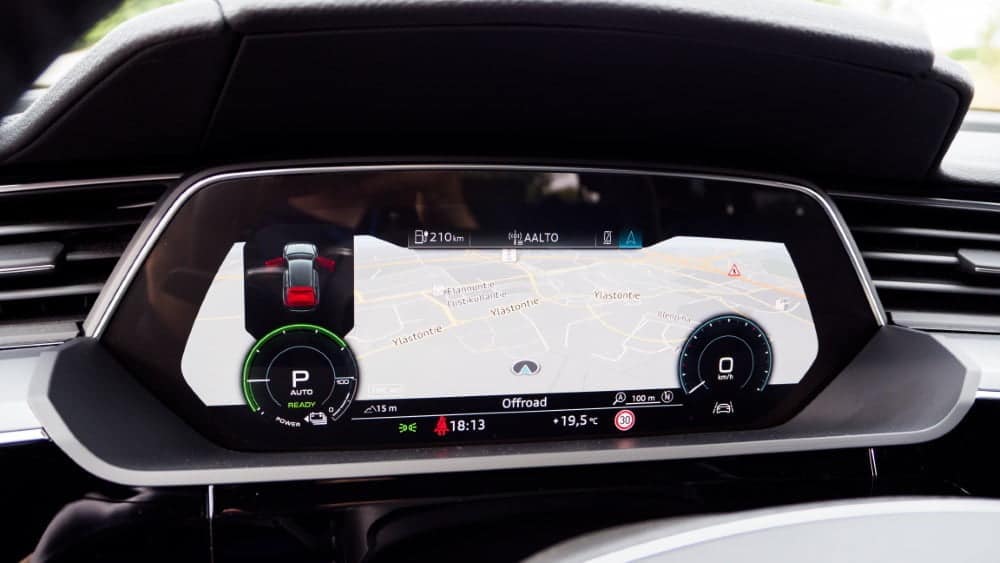
In the cabin, the design and layout is familiar from models such as the A7. Two large touchscreens, one above the other in the centre, control the radio, navigation, air conditioning and car settings. The buttons have been practically removed from the cabin.

Driver ergonomics have been honed to the highest level. The touchscreens feel clumsy, but you quickly get used to the menus and displays. For experienced audio drivers, the menus are quickly found in familiar places.
The weakest link in the cockpit is by far the ergonomics of changing radio channels. Channels are changed either via a touchscreen menu or via a wheel on the steering wheel, which could be much easier to use.

Sharing interior space with others
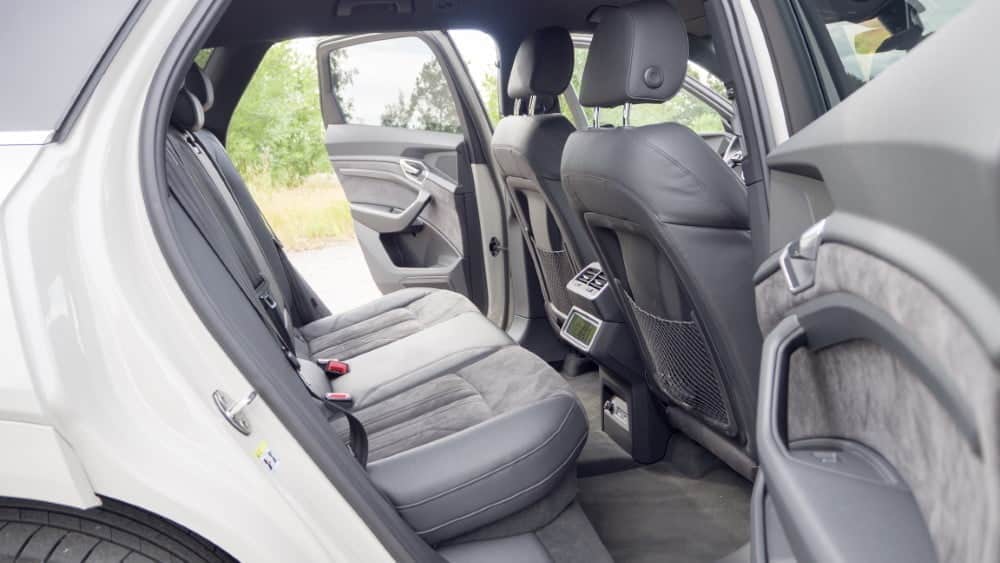
In addition to the quality, the interior is very comfortable thanks to the spacious size. There’s plenty of space in all directions in the front and rear seats. But there are only five seats, and there are no extra two seats in the boot.
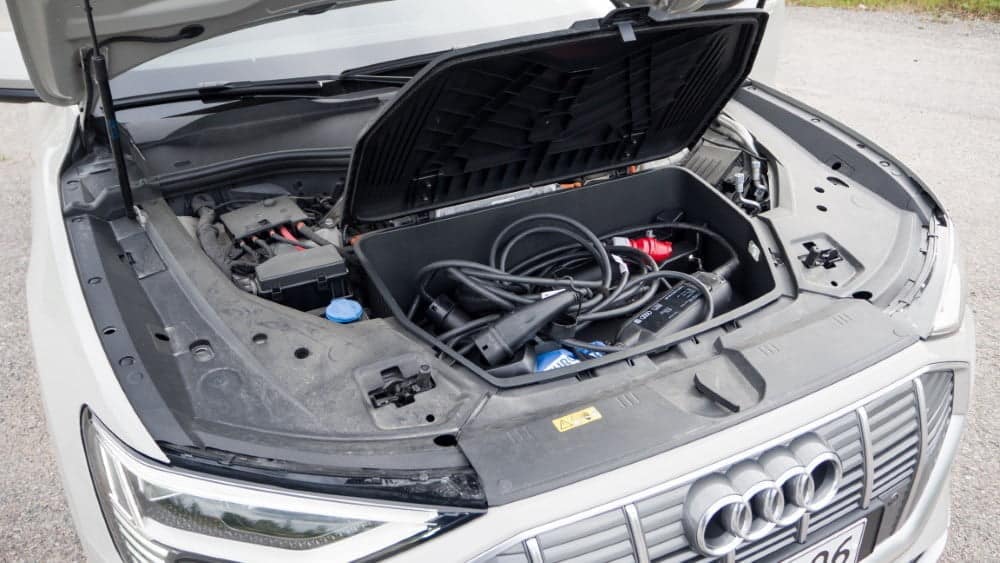
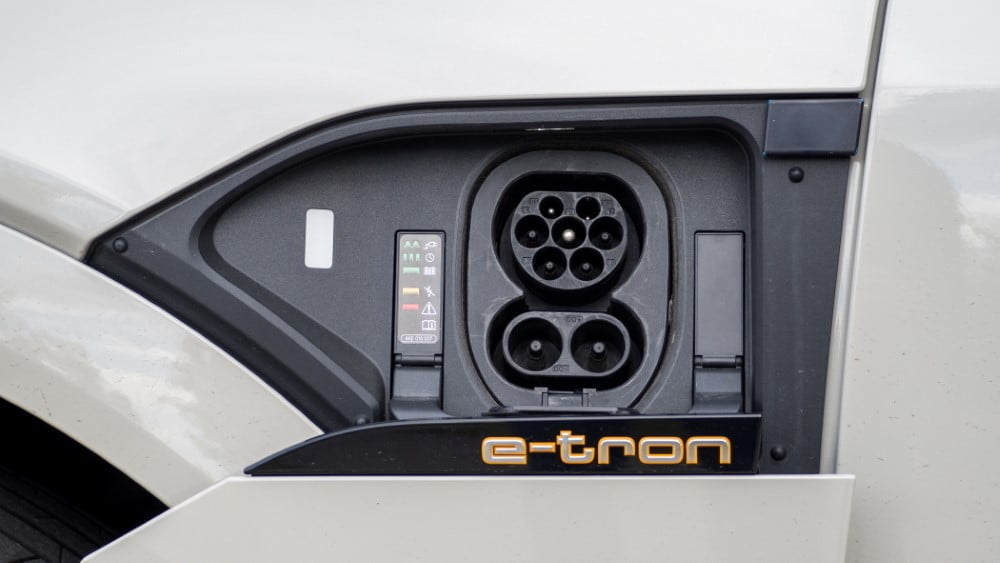
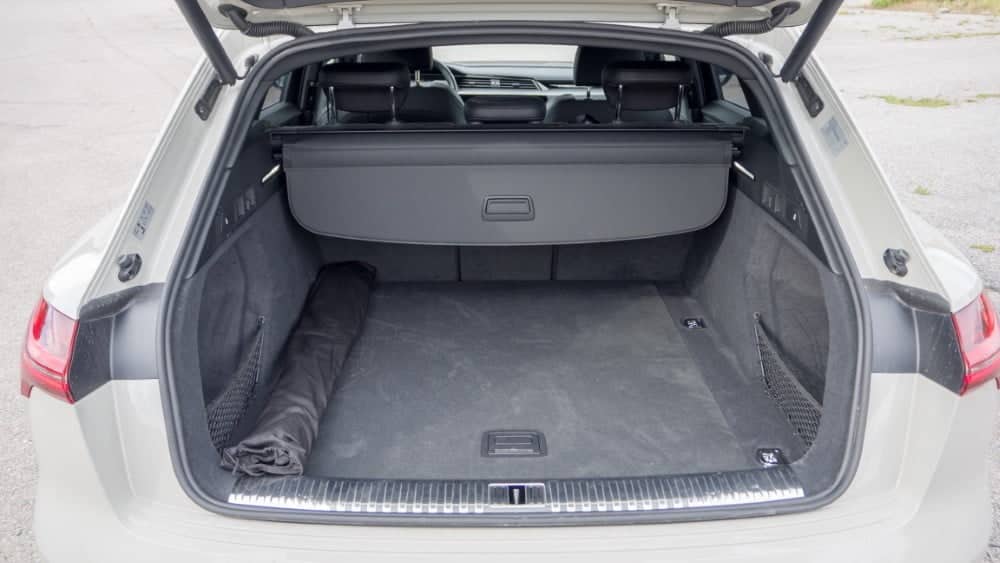
As with the interior, the boot is a good size. In the rear, there’s 600 litres of boot space. There’s also a small 60-litre storage space under the bonnet at the front, where charging cables can be conveniently stowed.
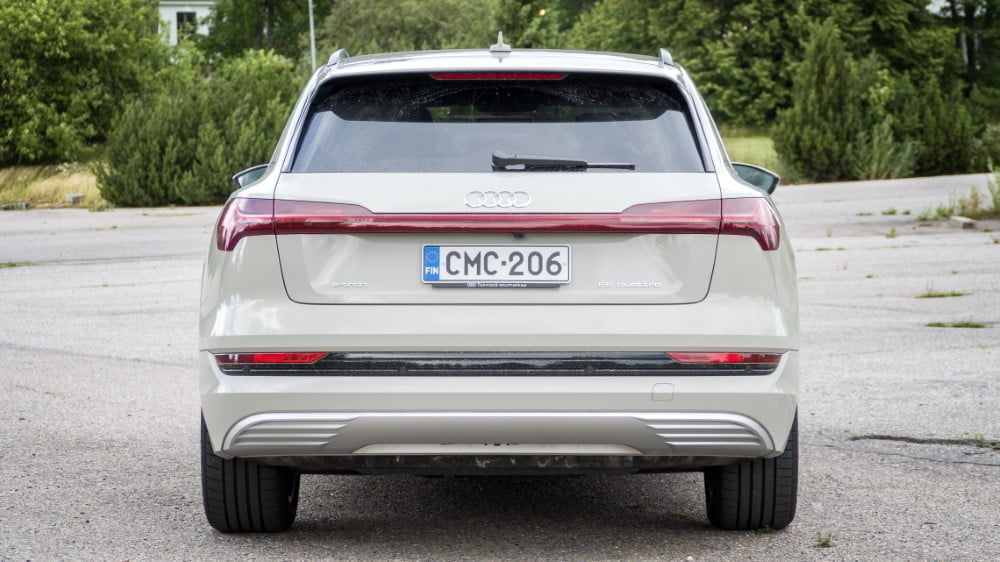
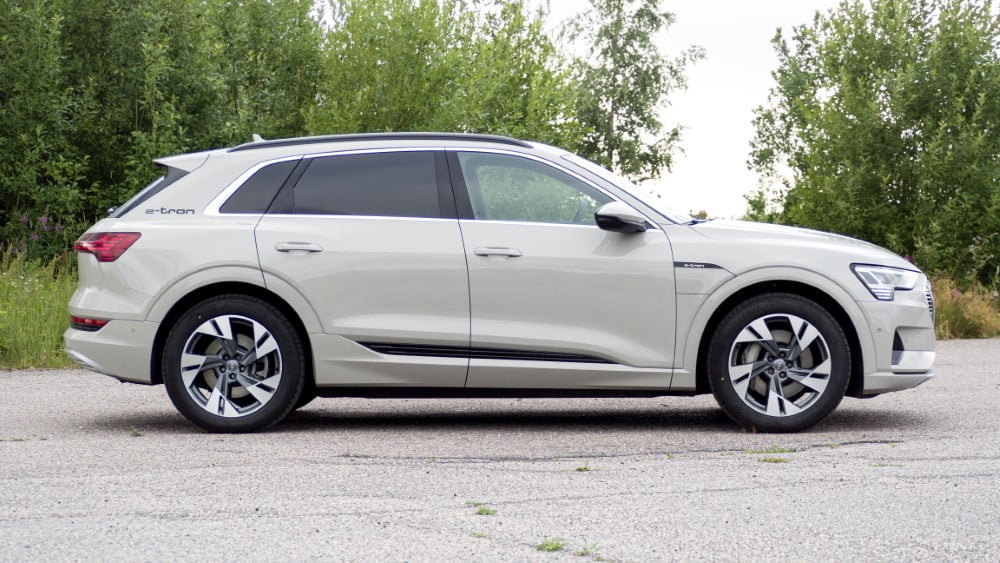
From the outside, the e-tron looks bigger than its dimensions suggest. It measures 4.9 metres long and just over 1.9 metres wide without mirrors. In terms of length, the e-tron sits between the Q5 and Q7, losing 15 centimetres to its big brother Q7.
Drivability divides opinion
The e-tron’s driving feel is very light and enhanced. The huge curb weight has been hidden behind the enhanced systems.
The downside of the light and enhanced ride quality is numbness. The throttle, brake and steering feel numb, which in its own way fits in perfectly with the easy-going nature of electric cars.
You can’t make an e-tron a feel-good gobbler on winding roads. The chassis has been made rigid for its own weight alone, which means that the chassis has had to compromise on feel.
Audi promises an acceleration time of 6.6 seconds (5.7 seconds with boost), which is well below the figures for Tesla, for example. An acceleration of less than five seconds would make the e-tron much sportier, but at the moment the e-tron’s nice, smooth ride completely masks its sporty qualities.
Electricity is flowing – a little too much
Combined WLTP consumption is 23.1 kWh/100km. The range is reported to be 417 km at best.
The drive from Vantaa to Salo on the motorway showed that the e-tron consumes far more electricity than promised. According to the trip computer, the average consumption on the motorway was in the 33 kWh/100km category.
In mixed driving, consumption was between 28 and 34 kWh/100km, which means an average range of about 300 km on a 95 kWh battery.

Your driving style does not seem to have a terribly big impact on average consumption in electric vehicles. Like engine braking, back-charging recovers energy during deceleration.
This “engine braking” can be fully automatic or manual. On the most efficient manual setting, the recovery does not come close to the deceleration of a Tesla. In the Audi, the deceleration feels more like normal engine braking than braking, unlike the Tesla.
Good start, but improvement expected
The electrification of cars is currently the hottest topic on the market. Competition will be fierce in a few years at the latest.
The Audi e-tron is a good start for Audi in the world of all-electric cars, and in terms of quality, Audi is perfectly capable of competing at the top of the market.
Where the e-tron needs improvement is in power consumption, efficiency and battery capacity – especially as this is no one-and-a-half-tonne fairy. The range is particularly important in Finland, where distances can easily become long in more remote areas.
Audi e-tron Advanced 55 quattro
- Maximum power: 265 kW, 360 hp.
- Maximum torque: 561 Nm.
- Acceleration: 6.6 seconds (0-100 km/h)
- Performance figures with boost function (8 sec. operating time): 300 kW, 664 Nm., 5.7 sec.
- Battery capacity: 95 kWh.
- Deadweight: 2565 kg.
- Traction: four-wheel drive (two electric motors)
- Boot space: 600 l.
- Combined consumption: 23.1 kWh/100km.
- Starting price: €87 028, test drive €103 909.